Grief Does Not Need a Pep Talk; It Needs Presence
/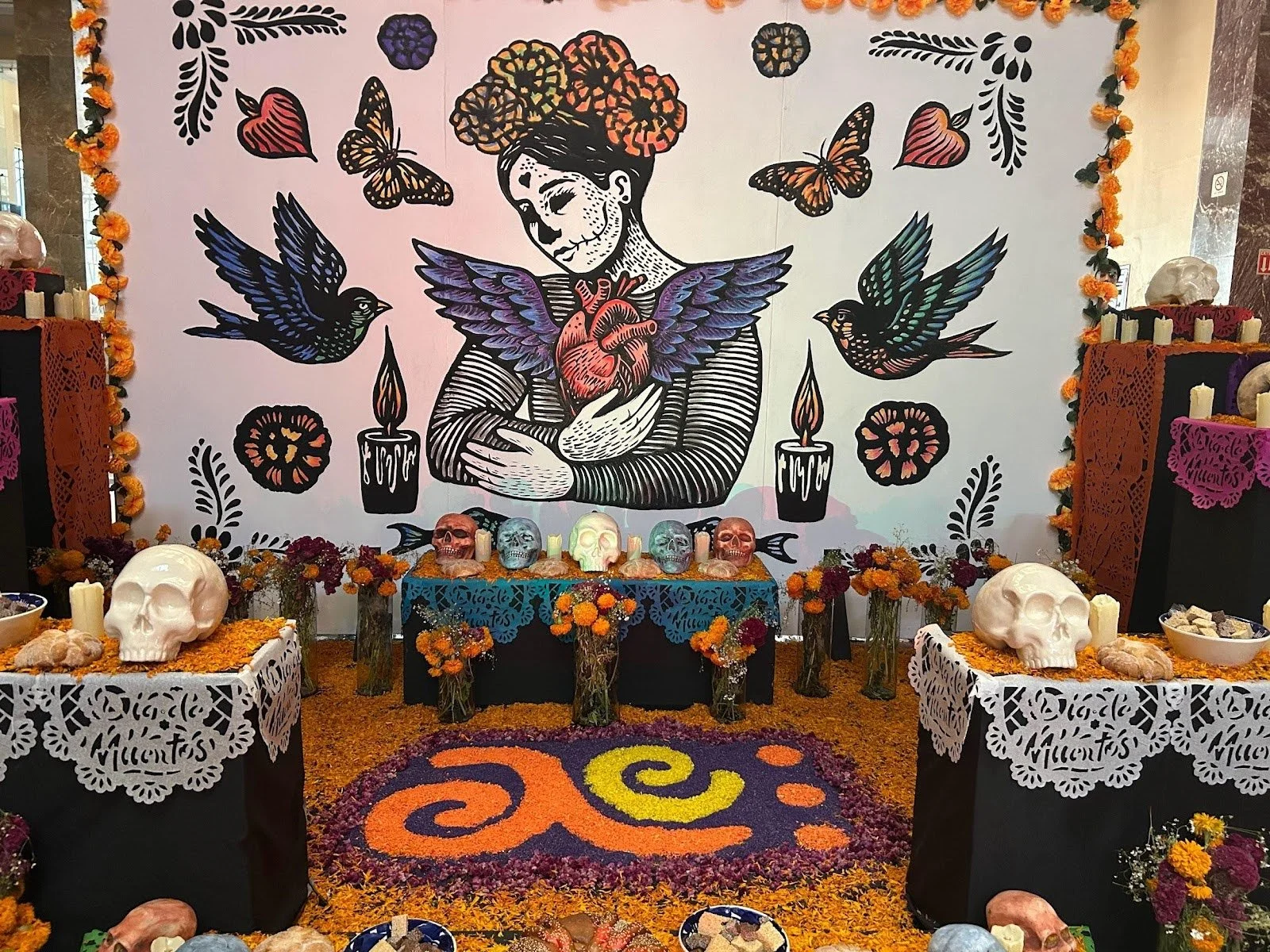
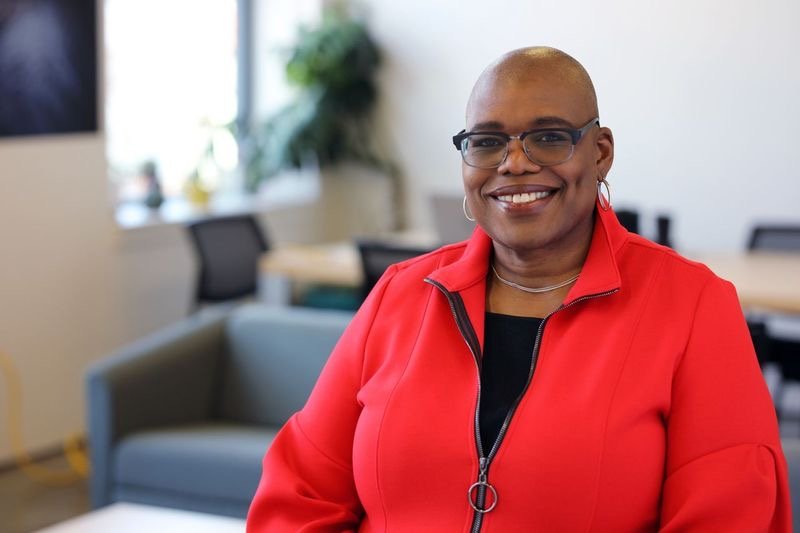
photo by Holly Holbrook
Grief is a universal experience. At some point, each of us will grieve a loss, not only the loss of a loved one, but likely the loss of relationships, identity, health, home, imagined futures, or the worlds we thought we were living in. And yet, Western culture remains profoundly ill-equipped to hold grief, especially when the loss is traumatic or out of order.
I learned this lesson as tragedy struck my family on a sunny August morning when I learned Lucas, my 18-year-old son, had died by suicide. It is impossible to describe the depth of despair a parent feels when their child dies. With Lucas’ death, the world as I knew it was obliterated. I had experienced other significant losses in my life, but nothing prepared me for this. I did not know how to live in a world that no longer contained my beautiful firstborn baby.
Unfortunately, it quickly became apparent that my community also had no idea how to handle this type of devastation. To be fair, our house did fill with family and friends for the first few months. We received many condolence cards, beautiful floral bouquets, and so many lasagnas. But as the days trickled by, these recognitions of our profound loss dried up. As others returned to their everyday lives, it became heartbreakingly clear that ours would never return to normal, and if we wanted lifelines, we needed to actively seek them out.
Our experience of grief and the support that followed are not unique. In most contemporary Western contexts, there is little space for enduring grief. This puts bereaved parents in a perilous space: Not only have they lost their child, but they often find themselves in a culture that does not acknowledge their reality. This is not just sad, it is dangerous. Research shows that when the grief of bereaved parents is not recognized or supported, it can lead to isolation, anxiety, depression, and even suicide (Christ et al., 2003).
In Western culture, grieving parents are often offered an emotional flowchart: diagnose, process, recover, reintegrate. Those who deviate, cry too long, love too visibly, or speak too openly are often seen as broken. They are pathologized and frequently—quietly—distanced. The message is subtle but clear: Sadness is acceptable only in small doses. And grief, if it remains for too long, is seen as a problem to be fixed.
Shortly after Lucas died, someone advised me, “It is better to just focus on the good times.” This comment knocked the wind out of me. It glossed over the magnitude of the loss, as if tragedy might be softened by selective memory. When grief is met with forced positivity, it does not soothe; it isolates. It communicates that the pain is too much, too disruptive, too uncomfortable to be acknowledged. Instead of drawing us closer, it pushes the bereaved further into silence. But grief is not a problem to be solved. It is the human response to an irrevocably altered world. It is a sacred part of existence. It is not meant to be fixed but to be felt and witnessed.
“When grief is met with forced positivity, it does not soothe; it isolates.”
Grief in a Culture That Avoids Pain
Modern Western culture treats happiness as our permanent desired state. We value emotional control, productivity, and forward motion. Sadness is framed as something to move beyond. The message most bereaved parents get at some point is that their grief time is up. Today, it’s not enough to endure suffering; the expectation is to transform it into something redemptive. And when the bereaved resist this narrative, they are often cast as killjoys, individuals who not only suffer tragedy but also make others uncomfortable by expressing that pain. This embodied grief is perceived as a threat to others’ happiness (Kofod, 2021). However, not all pain wants to be transformed. Some things do not happen for a reason. Some losses cannot be redeemed.
Bereaved parents do not have to conquer their sadness; if they and society allow that sadness to be part of their story, they can find a way to incorporate their loss into their future narrative. One bereaved mother I interviewed for my Master’s capstone described how several therapists failed to resonate with her experience of loss, until one offered a different kind of honesty. This therapist explained that while she could help the mother move through guilt, blame, and rumination, she would not be able to return her to the life she had before. What she could offer, however, was a way to arrive at pure sadness, a sadness that was no longer tangled with self-blame or mental looping. The therapist described this form of sadness as something beautiful and real, a fundamental part of the human experience. This reframing allowed the mother to begin seeing her sorrow not as something broken, but as something sacred and enduring. Through this lens, wholeness and brokenness are not opposing states (Pargament et al., 2022). Rather than hiding our broken pieces in dark corners, integrating them into the fabric of our life stories can foster wisdom, growth, and a meaningful existence. When we acknowledge and incorporate our losses, we do not eliminate the brokenness; we transform it into something meaningful that becomes part of our evolving identity (Pargament et al., 2022).
A Cultural Counterpoint: Grief in Mexico
Grief is not simply a solo psychological process; it is shaped by the norms and values of the society in which it occurs (Rosenblatt, 2008). Every culture teaches people what emotions are permissible, when tears are allowed, and how love may be expressed after loss. In some cultures, grief is sequestered. In others, it is shared.
I had the great fortune to attend a retreat in Mexico during their annual Día de los Muertos celebration (made extra special by the fact that fellow MAPPster Henry Richardson facilitated it). This holiday invites ancestors home each year, through altars, food, candles, and stories. Immersing myself in a culture that welcomes the dead home each year felt like a balm on a wound that never fully heals. It reminded me of our own birthday ritual, a gathering of community to honor those we love. For a Western bereaved parent, this openness is profoundly healing. In a culture that avoids mentioning the dead for fear of causing pain, the silence becomes its own cruelty. Yet as a parent who has lost a child, I can tell you that the most painful thing is not speaking their name, but feeling their memory fade, as if their presence in the world were slipping quietly into oblivion.
In Mexico, death is not something to hide or suppress. It is woven into life, honored and remembered publicly and communally. Memory is not a threat to well-being; it is a source of belonging. As Nobel laureate Octavio Paz (1950, as cited in Gutiérrez et al., 2020, p. 1) wrote: “The word ‘death’ is not pronounced in New York, in Paris, in London, because it burns the lips. The Mexican, in contrast, is familiar with death, jokes about it, caresses it, sleeps with it, and celebrates it.”
In Mexican traditions, the dead remain present. Memory is not something to “move on” from; it is something to live with. Ofrendas (altars featuring photos, candles, food, and meaningful personal items that represent the person’s life) and shared stories allow the bereaved to carry love forward openly. This cultural scaffolding provides a crucial form of narrative permission. It says: Your grief belongs here. Your love is not excessive. Your memories are welcome.
Narrative Identity and Agency in Grief
By contrast, in dominant Western cultures, grief is private, quiet, and expected to resolve. Without communal mourning, the bereaved lose not only community but also permission to speak. Psychologist Dan McAdams (2001) describes identity as the story we tell about our lives and our relationships. When someone we love dies, the story fractures. In grief, agency is the ability to choose how we speak about the loss, how we remember, and how we continue the relationship with the one who has died.
Unfortunately, despite overwhelming evidence that spending time with one’s grief and fostering continued bonds are essential to emotional processing and narrative repair, Western clinicians often view this expression as pathological, labeling these integration practices as “prolonged” or “complicated grief” (Hockey et al., 2007). In these situations, bereaved parents are not only navigating the devastating loss of their child, but they are also told they are doing it wrong. This makes the loss even harder as parents, often silently, try to figure out their new story.
Several mothers I interviewed described having to rewrite their stories and create a new narrative for life after loss. One mother (personal communication, May 26, 2025) described this shift with stunning clarity:
“Two nights after he died, I was lying there thinking: I am the woman whose son took his life. That story was full of pity and judgment. And then this voice came in the night and said, I am the woman who learns how to love him now that he’s gone. That is a very different story. That is a story I can live into.”
When Positive Psychology Meets Grief
I came to positive psychology because I wanted to learn a language of hope for myself and others who have suffered devastating loss. Not to find never-ending happiness, but to lean into meaning, courage, connection, and hope. Positive psychology is frequently misconstrued as promoting a mindset of relentless optimism or “looking on the bright side.” But at its core, it is the study of what allows humans to live with purpose, belonging, and hope, to flourish even when life is unbearably hard (Csikszentmihalyi, 2008).
I am happy to say that I found many elements of positive psychology that could be applied to those navigating loss. Yet caution is essential. Not every tool in the positive psychology kit is ready for the rawness of grief. Gratitude lists and savoring exercises can feel fake, too bright, too fast, and too focused on “better.” Grief does not want to be transformed. It wants to be held. Too often, positive psychology relies on the language of overcoming: bounce back, grow stronger, and transform adversity into an advantage.
REMAP: Reframing Flourishing in the Context of Grief
This realization led me to consider how the frameworks of positive psychology could evolve to meet the emotional reality of grief. PERMA remains foundational in positive psychology, offering a multidimensional view of flourishing. I believe the PERMA framework offers a meaningful lens for exploring well-being in the context of grief. Yet even though it is not intended to be linear, opening with positive emotion felt misplaced. My advisor, Abimbola Tschetter (personal communication, March 25, 2025), introduced the idea of “suspending the positive” for specific grieving populations, and this idea resonated strongly with me. Inspired by her insight, I propose REMAP, a reframing of the PERMA elements in an order that honors the lived experience of grief:
R — Relationships
Maintaining bonds with the deceased while also nurturing connections with the living, often with those who have endured a similar loss.
E — Engagement
Finding presence in meaningful activities or small acts of living, even when the world feels surreal.
M — Meaning
Meaning does not come from the loss. It emerges as we learn to live with the loss and continue to find what still matters to us in this world.
A — Accomplishment
The quiet work of surviving the day, paying a bill, answering a message, breathing. These count.
P — Positive Emotion
Joy does not betray grief. It returns slowly and in its own time, like the flicker of candlelight in the evening breeze.
I do not believe grief ends; I think it reshapes us. Over time, we begin to reinhabit a world that is forever altered but not devoid of beauty. The ache remains, but so does love, courage, and connection. If positive psychology is truly about human flourishing, it must make room for the whole spectrum of being: joy and pain, light and dark, the living and the dead who remain part of our stories. Grief is not the opposite of flourishing; it is one of its deepest expressions.
References
Christ, G.H., B., G., Malkinson, R., & Rubin, S. (2003). Bereavement experiences after the death of a child. In M. J. Field & Behrman (Eds.), When children die: Improving palliative and end-of-life care for children and their families (Appendix E). National Academies Press (US). https://www.ncbi.nlm.nih.gov/books/NBK220798/
Csikszentmihalyi, M. (2008). Flow: The psychology of optimal experience (Harper Perennial Modern Classics, eds). Harper Perennial.
Gutiérrez, I. T., Menendez, D., Jiang, M. J., Hernández, I. G., Miller, P., & Rosengren, K. S. (2020). Embracing death: Mexican parent and child perspectives on death. Child Development, 91(2). https://doi.org/10.1111/cdev.13263
Hockey, J., Kellaher, L., & Prendergast, D. (2007). Of grief and well-being: Competing conceptions of restorative ritualization. Anthropology & Medicine, 14(1), 1–14. https://doi.org/10.1080/13648470601106079
Kofod, E. H. (2021). The grieving killjoy: Bereavement, alienation and cultural critique. Culture & Psychology, 27(3), 434–450. https://doi.org/10.1177/1354067X20922138
McAdams, D. P. (2001). The psychology of life stories. Review of General Psychology, 5(2), 100–122. https://doi.org/10.1037/1089-2680.5.2.100
Pargament, K., Wong, S.-C., & Exline, J. J. (2022). The Oxford handbook of the positive humanities. Oxford University Press.
Rosenblatt, P. C. (2008). Grief across cultures: A review and research agenda. In Handbook of bereavement research and practice: Advances in theory and intervention (pp. 207–222). American Psychological Association. https://doi.org/10.1037/14498-010

About the author | Holly Holbrook, MSW, MAPP, (C’25) is a bereaved parent and facilitator who supports grieving parents in navigating life after child loss. She holds a Master of Social Work and a Master of Applied Positive Psychology from the University of Pennsylvania. Holly has written and researched narrative reconstruction, continuing bonds, and the role of community in grief. She integrates positive psychology with narrative and continuing bonds approaches, offering a compassionate and non-linear path for parents to live forward while honoring their children as ongoing and cherished parts of their lives.