Yes, and Yet: When Joy and Loss Learn to Cohabitate
/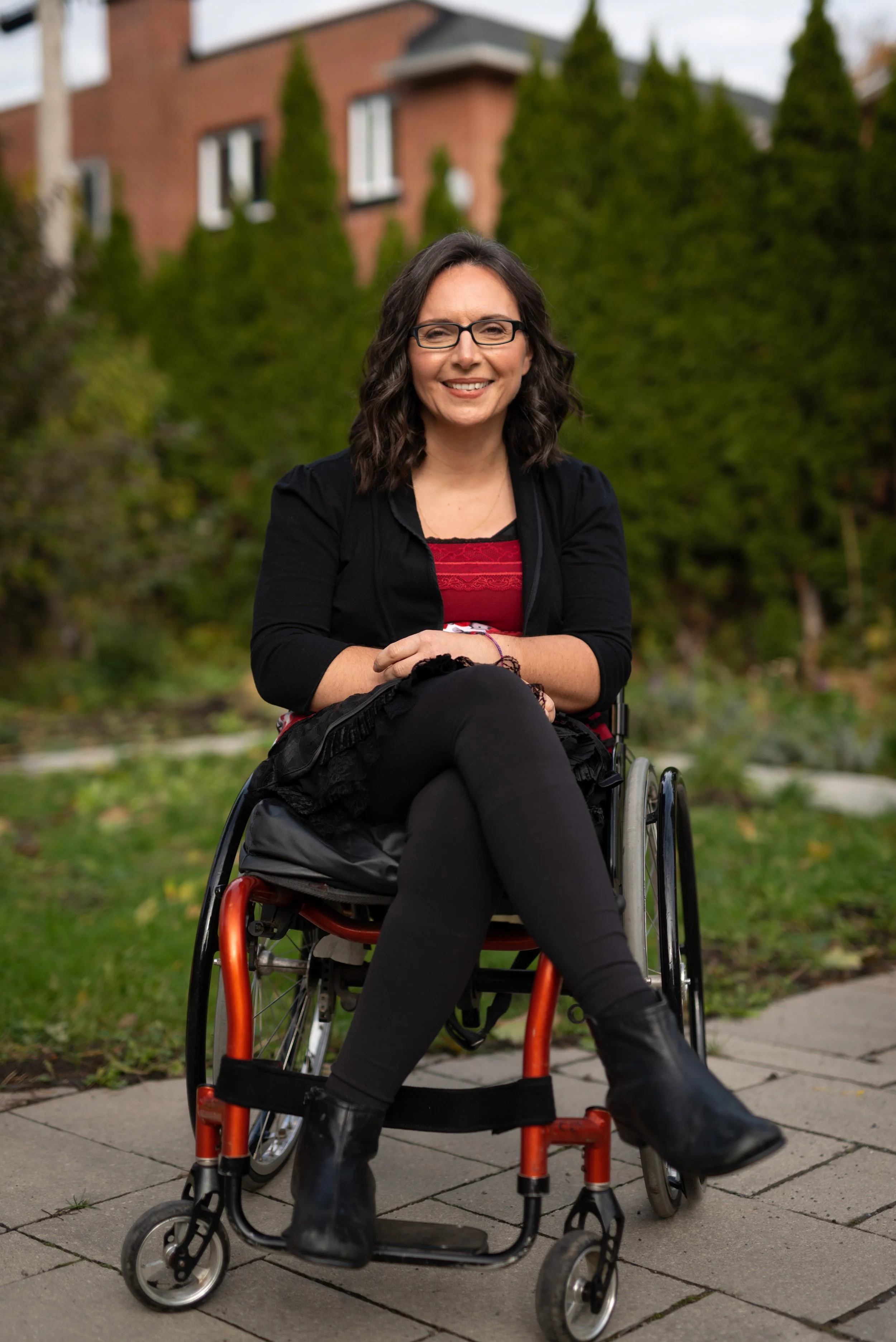
Photo by Valerie Rosen
On January 5, 2012, I sustained a spinal cord injury. In a matter of seconds, I lost the ability to control my legs with my brain—a traumatic loss that made me struggle for years. The loss of our bodies and the way they have always worked is comparable to the loss of an intimate partner, as we are changed forever (Clifton, 2014).
And yet, if you ask me, I live a pretty good life.
The Uninvited Roommate
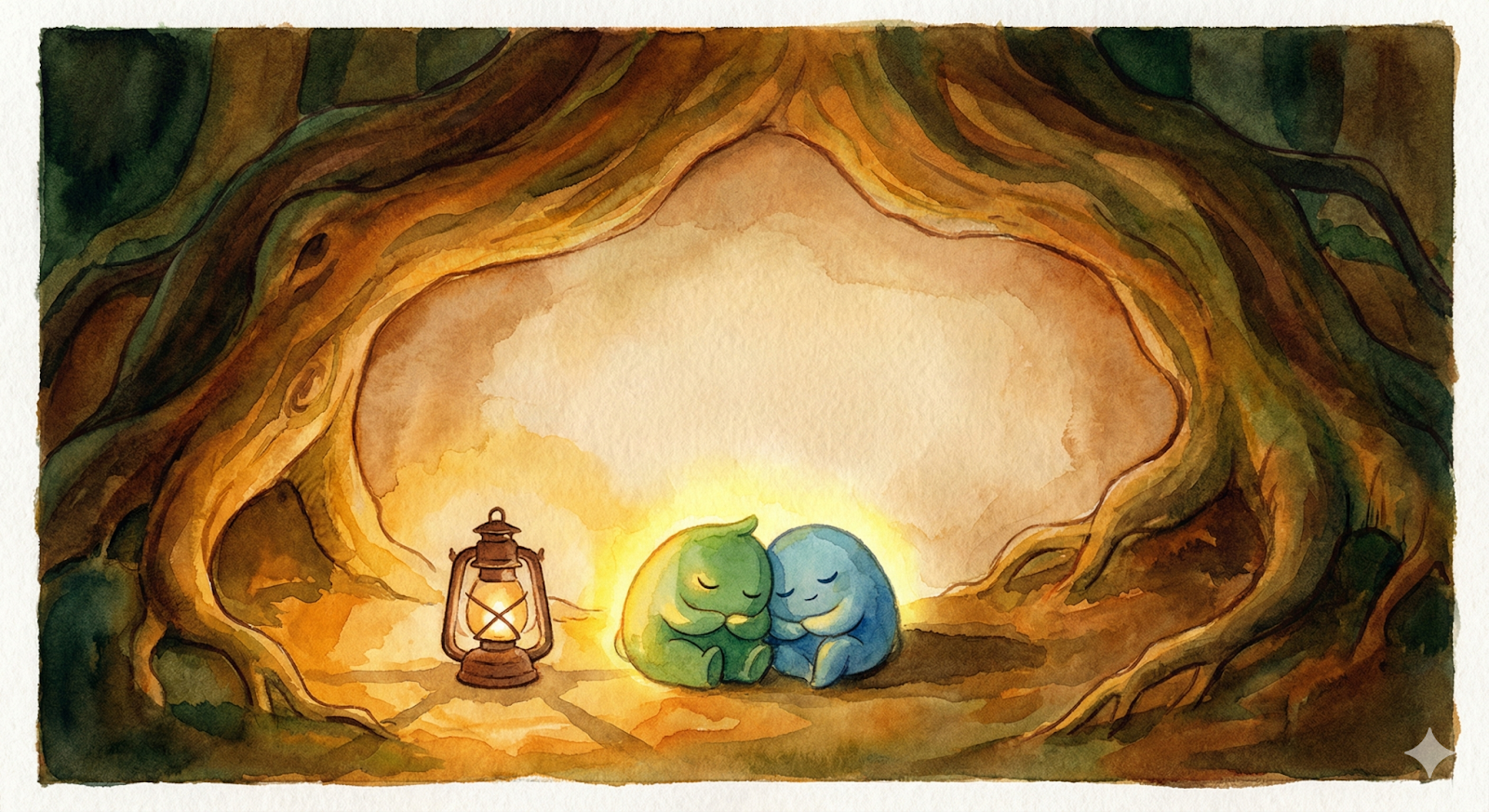
A spinal cord injury (SCI) is much more than just “not walking” (Aunos et al., 2022; Budd et al., 2020; Clifton, 2014). My brain took some time to integrate my wheelchair as my legs, to adjust to how I move my body in space without falling, and to learn to stay balanced using muscles I didn’t even know existed. In that respect, a SCI is like an unwanted roommate that shows up without even knocking, and worst of all, unpacks all their dirty belongings—the secondary losses—across my beloved apartment.
Depending on the level of injury, those secondary losses add up. In my case, the injury was high (T2), affecting about 75% of my body. The big secondary losses included the loss of my career the way I had intended it, and with it, the loss of the income. I lost friends who just couldn’t see me as a cripple, although I could now argue, “Were they really my friends?” I lost my beloved hobbies, which included golf, scuba diving, and hiking.
With those big ones came the loss of bodily functions—something most people do not realize. For example, I lost the ability to regulate my body temperature, which is why I always need a scarf around my neck. I can no longer control my bladder or bowel functions. My digestive system has become hypersensitive to certain foods (e.g., spices), and my metabolism has slowed down by approximately 20%. With no access to abdominal muscles, my capacity to push on my diaphragm is restricted. This means coughing efficiently requires me to push using a table or with someone’s assistance.
Less or no muscle function, especially around the midsection, also means less ability to burn calories, which has affected how my body is shaped. Everything relies on my arms, shoulders, and back muscles. Period. These changes further impact my energy. “Walking” a mile using my arms is a whole lot more taxing than using my legs. If you then add all the transfers I must do (e.g., bed to chair, chair to shower chair, back to chair, back to bed, back to chair, into car, and so on), perhaps you can understand how exhausted I am at the end of the day.
Being spontaneous is also more of a challenge. Because I lack bladder control, I use the washroom on a timer. I calculate the amount of liquid I drink and how much I evacuate. Going to a new place on a whim? First, this requires me to ask if there will be an accessible toilet. Surprisingly, the answer is often a resounding NO. The risk of not having access to a toilet on time is greater than just peeing in my pants. A full bladder increases my blood pressure, and it can get so high that it is life-threatening. If you ever see my cheeks get flushed, it is likely that my blood pressure is rising above healthy levels. Incontinence surely leads to shame (believe me!), plus an increased risk of developing a sore, which means weeks, if not months, of lying in bed until the sore heals, or even surgery. Then, there is the loss of feeling someone’s touch on my body. The loss of feeling pain when I get hurt, which would tell me if something were wrong. Pain now shows up as chronic and can feel like an electric discharge or chemical burn. It can literally take my breath away.
All these losses and the stories I tell myself about them affect how I see the world (less safe, as I feel more vulnerable). How I parent. How I socialize. How I travel. How I date or not (What man would want to deal with this or see me as desirable?). There is a snowball effect of losses, and around the corner, there is always another one I hadn’t thought of or experienced before. Aging doesn’t help.
Many grief models exist. The most famous is Kübler-Ross's (1969) five-stage model—denial, anger, bargaining, depression, and acceptance—developed from interviews with terminally ill patients. One father who became paraplegic related his experience to those stages (Clifton, 2014), but I don't. While Kübler-Ross's work brought important awareness to the dying process, contemporary grief researchers have strongly criticized the stage model for lacking empirical support and being applied too rigidly (Avis et al., 2021; Stroebe et al., 2017). Kübler-Ross herself acknowledged that stages could overlap, occur simultaneously, or be missed altogether. They were meant as descriptive categories, not prescriptive steps (Corr, 2020). More importantly, Kübler-Ross developed these stages for people facing their own death, not for those grieving losses or adapting to acquired disability.
I don’t think grief is linear. It comes in waves. I can be okay one day, dealing with everything related to SCI health care, and then the next day, because my elevator breaks down, I break down. This experience aligns more closely with Lazarus and Folkman's (1984) transactional model of stress and coping, which proposes that stress arises from the transaction between a person and their environment. According to this model, when faced with a stressor, we engage in primary appraisal (evaluating whether the situation is threatening or harmful) and secondary appraisal (evaluating our resources and capacity to cope). Coping strategies then fall into two categories: problem-focused coping (attempting to change the situation itself) and emotion-focused coping (changing our relationship with the situation to reduce stress). For me, acquiring a SCI meant continuous reappraisal—each new loss required me to evaluate both the threat it posed and my available resources to manage it. Some situations called for problem-focused coping (e.g., learning bladder timing, building arm strength), while others required emotion-focused strategies (e.g., accepting what couldn't be changed, reframing my identity).
Stroebe and Schut (1999) have suggested a different model—the Dual Process Model of coping with bereavement. They explain how, in grief, we either deal with the different losses (loss-orientation) or with the necessity of re-constructing (restoration-orientation) our lives within the space that those losses have left behind. They conceptualized that in any given day, a person might oscillate between loss and restoration. Although I believe this is the most comprehensive model of grief, I do not believe we necessarily “oscillate” between the two in a back-and-forth manner. In my experience, I live with both intertwined.
Adapting to a spinal cord injury is dynamic and ongoing (Craig et al., 2022). In other words, I am constantly confronted with what I lost every time I need to urinate using a catheter, or when my little wheels get stuck on a crack in the sidewalk, threatening to throw me out of my chair, or when I struggle to cut a sweet potato due to lack of core strength. All these situations propel me to experience feelings, thoughts, and actions that force me to re-adjust, find new strategies, re-construct, and re-model those elements of my life. This is where Lazarus and Folkman's (1987) concept of reappraisal becomes crucial—as I cope with one challenge, the situation changes, requiring me to reappraise both the stressor and my resources continuously.
Loss has moved in. And because it is here to stay, I have realized that I better befriend it.
Forced Habituation: Loss Renovates the Apartment
What we pay attention to grows and changes us (Csikszentmihalyi, 1990). After SCI, loss demanded all my attention. I ran bladder timing calculations, became hypervigilant toward any signs of autonomic dysreflexia (rapid spike in blood pressure), focused on transfer mechanics, and played around with food and liquid restrictions. Still, on most days, these calculations run in the background, adding to my mental charge.
The road to living a pretty good life with an SCI took years. Habituation takes time. And the return to somewhat of a baseline takes time, too. The first 10 years were hard. But somehow, I learned to manage everything there is to manage. I gained some control over my bowels and bladder, knowing what would trigger incontinence of any sorts. I learned in which circumstances painful electric discharge at the site of my injury is triggered and what exacerbates the pain I feel in my shoulders. I convinced myself I didn’t need a life partner (sometimes, denial is bliss), and I became okay with asking for help (truth be told, still struggling with that).
I became ultra-focused and very boring and sad (if only you knew me before my accident!). Loss had remodeled everything and had changed the floor plan.
Through neuroplasticity, I made new associations to favor my survival and well-being. I became accustomed to constraint, vigilance, and limitation. As the lone parent of a toddler, this habituation felt necessary. But it was only adaptive, not chosen.
Choosing Joy as a Second Roommate
The fact that these losses had already rearranged everything didn’t stop me from inviting another roommate to move in with us. This one was introduced to me by my 2-year-old son, Thomas. At that age, when their needs are met, everything becomes beautiful and funny and joyful. And so, as a way to cope, I chose to notice and spend deliberate time with Joy, as often as I could. After all, the more time I spent with Joy, the greater my chances of becoming joyful.
I could no longer practice the virtues I had lost (spontaneity, physical freedom). But I could practice gratitude—for my arms that allowed me to hug and care for Thomas, for the accommodations that gave me a chance to do things on my own, albeit differently. Gratitude didn't make the losses disappear. But it helped me tolerate them. I could be grateful for being able to manage a certain control over my bladder and grieve the loss of spontaneity. Both true simultaneously. Gratitude practices in the context of ongoing loss aren't about “counting blessings,” they’re about learning to hold both the blessing and the wound.
I could practice appreciation for the beauty and excellence. A hug from Thomas would create a surge of love in my heart. Seeing how nurses and family members cared for their loved ones on the ward quietly reminded me that maybe people like me were still beautiful and enough. And that no matter what, I still meant the world to my son. When everything in my body felt foreign, ugly, and unreliable, noticing beautiful things outside of me became an anchor. It didn't erase the losses; it gave me a place to store these beautiful and joyful moments into what I now know as a positive portfolio. Each moment of joy was new. What became habitual was looking for it.
And then, ten years into it, living with a SCI became my new normal. Not because I got over it. But because I got used to it until I accepted it. Timely acceptance is an important agent in dealing with loss. Presenting acceptance strategies too early can be damaging, as people might be more focused on rebelling against them. For the longest time, I would say that I would NEVER accept not walking, which left me holding on to my past self and diverted too much energy to something I couldn’t control. But with time, I learned what acceptance truly meant. I can now say I am not walking. It is a fact. I go to the gym to train so that when new technologies or medical advances that could restore some of the secondary losses emerge, I can be in top shape to be considered as a participant. Acceptance allows me to be efficient in where I spend the energy I have.
By accepting the realities of my SCI, I liberated the energy I was using to hold onto my past self, which allowed me to make space for who I was becoming. Accepting that my life before the accident would never return, I began to notice how self-efficacious I had become at navigating life as a wheelchair user. Brutally aware that it could all be worse, I choose to celebrate the things I have: my arms, for instance, and the opportunity to see my son grow into a wonderful, kind, thoughtful teenager.
Finding Benefits in Unexpected Places: Disability Reappraisal
Learning to practice gratitude and appreciate beauty were the first steps. But something deeper happened over time—I began to reappraise what disability meant in my life.
Research on post-traumatic growth shows that people who acquire disabilities can experience profound positive changes when they redefine their identity (Machida et al., 2013; Pollard & Kennedy, 2007). This isn't about toxic positivity or pretending losses don't exist. It's about benefit finding—discovering genuine advantages that exist alongside the very real wounds.
At first, this felt impossible. What benefit could there possibly be in losing bladder control? In chronic pain? In being unable to hug my son while standing?
But slowly, benefits emerged:
The benefit of advocacy: Because I am a disabled mom doing it, I can speak about our capacity to raise children from lived experience—backed by clinical training and research. I couldn't find role models for years. So I became the role model I needed.
The benefit of resilience modeling: My son watches me face fears daily. He sees me calculate, adapt, try, fail, and try again. He's learning that strength isn't about avoiding difficulty—it's about showing up anyway.
The benefit of creativity: When I can't do something the "normal" way, I must invent new ways. My communication, observation, and memory skills have sharpened dramatically because I need to tell others exactly where things are in my house and exactly how to help me. It has also shown Thomas how to innovate, using physics and robotics.
The benefit of deeper connections: The friends who stayed? They're real. The ones who left? They taught me something, too. And the SCI community I found—these people understand in ways others cannot.
This reappraisal didn't happen overnight. It took years. But each time I noticed a benefit, it didn't erase the loss—it made room for both to coexist.
And then I realized that the snowball effect works both ways.
Losses accumulate. Yes.
But so do positive practices.
Each moment I notice beauty. Each time I feel grateful. Each joyful moment. These accumulate. On any given dark night lies the ability to light a candle, and another, and another. The more candles are lit, the more light there is. In those moments, I would argue, it is still dark. And bright.
Finding Community and Belonging Through Sport and Shared Experience
Ten years into living with SCI, I had adapted. But I was also isolated. Ultra-focused. Boring and sad.
Then I discovered adaptive sports and the broader SCI community—first online, then in person. Adaptive sports is about building community, constantly learning, and readjusting. Participation in adaptive sports is associated with identity redefinition, active coping, and post-traumatic growth (Machida et al., 2013; Smith et al., 2025). There are many different ways to ride a bike or go for a hike. There are many different pieces of equipment that would allow me to play golf again and even scuba dive. Being paraplegic now means I need to search for communities that have already figured out how to do it differently.
This fall, I met a community of women who mountain bike in the Canadian Rockies, no less. They do it together, support each other, and help one another during the difficult transfers from wheelchair to bike (and back up). This is what a community of people like us does—there is no space for “I can’t do it; let’s ask someone.” They showed me how to reframe and instead ask, “How can I do it in a way that makes sense to me? How do you do it?” This allows me to learn from them.
When you acquire a disability, you may lose your community of able-bodied peers who can't fully understand what it's like to calculate bathroom timing or face inaccessible buildings. You need to find your people—the ones who get it without explanation. They are also the ones who know that it can be done. In front of a peer who has figured it out, there is no way I am going to ask for help from an able-bodied person—unless I really need to.
Social media was another way for me to connect with other wheelchair users, including moms with disabilities. It became a new practice. I followed them. Watched how they did things. Saw them traveling, parenting, working, living full lives. And each time I saw someone like me doing something I thought impossible, it became a little less impossible for me.
Clifton et al. (2024) found that when people with SCI participated in a 10-week program focused on meaning, strengths, gratitude, and connection, they reported that connecting with other SCI people was the most valuable element. It helped them regain control, find meaning in activities they loved, and feel part of a larger community.
This is what belonging does—it gives us permission to grow. When I saw other disabled parents thriving, I could imagine myself thriving too. When I saw wheelchair users traveling solo, I could imagine myself at MAPP, the Master of Applied Positive Psychology program at the University of Pennsylvania.
MAPP was another leap into community, this time not just with disabled peers but with scholars and practitioners of the good life. My life wasn't just “good” anymore; it was extremely hard and delightful. I got out of my comfort zone. I travelled on my own. I learned to trust myself again. I learned that people could still want to know me, and I could still make incredible friends for life. I was reintroduced to a new me, one who looked a little bit like who I was before, but also someone entirely new.
Through MAPP, I learned the language for what I'd been doing: benefit finding, post-traumatic growth, meaning making. But more than that, I learned I belonged in spaces of intellectual rigor and growth. My disability hadn't disqualified me from the good life—it had given me a unique vantage point from which to understand it.
The Good Life as Practice
I live a pretty good life.
Not the life I planned. Not the life I would have chosen. But a good life nonetheless.
Because joy and loss have learned to cohabitate—not peacefully, but persistently.
I practice gratitude for my arms, my son, my community, and the adaptations that give me autonomy.
I practice appreciation for beauty that anchors me when my body feels foreign.
I practice benefit finding—looking for genuine advantages alongside genuine losses.
I practice belonging—connecting with others who understand, who inspire, who remind me I'm not alone in this strange apartment where joy and loss share space.
What we pay attention to grows. What we practice, we become.
And after 14 years of practice, I've become someone who can hold both: the grief of what was lost and the gratitude for what remains and what has grown. The pain of limitation and the pride of adaptation. The isolation of disability and the belonging of community.
Not instead of each other. Alongside each other.
The good life after profound loss isn't a return to baseline. It's learning to build a new home where joy and loss are both on the lease—and where community helps you remember you're not the only one living this way.
AND yet.
Author’s note
These books have also shaped my understanding of loss and helped change my perspective.
Chödrön, P. (1997). When things fall apart: Heart advice for difficult times. Shambhala Publications.
Frankl, V. E. (1946/2006). Man's search for meaning. Beacon Press.
Hanh, T. N. (2010). No mud, no lotus: The art of transforming suffering. Parallax Press.
Hone, L. (2017). Resilient grieving: Finding strength and embracing life after a loss that changes everything. The Experiment.
Kushner, H. S. (1981). When bad things happen to good people. Schocken Books.
Sirois, M. (2024). A short course in happiness after loss (and other dark, difficult times). Tarcher Perigee.
References
Aunos, M., Spencer, M., Pacheco, L., & Pituch, E. (2022). This changed everything: a critical reflection on the impact internalised ableist constructs had on becoming a disabled mother. Disability & Society, 39(5), 1079-1101. https://doi.org/10.1080/09687599.2022.2137392
Avis, K. A., Stroebe, M., & Schut, H. (2021). Stages of grief portrayed on the internet: A systematic analysis and critical appraisal. Frontiers in Psychology, 12, 772696. https://doi.org/10.3389/fpsyg.2021.772696
Budd, M. A., Gater, D. R., & Channell, I. (2022). Psychosocial consequences of spinal cord injury: A narrative review. Journal of Personalized Medicine, 12, 1178. https://doi.org/10.3390/jpm12071178
Clifton, S. (2014). Grieving my broken body: an authoethnographic account of spinal cord injury as an experience of grief. Disability and Rehabilitation, 36(21), 1823-1829. DOI: 10.3109/09638288.2013.872202
Corr, C. A. (2020). Elisabeth Kübler-Ross and the "five stages" model in a sampling of recent American textbooks. Omega, 82(2), 294-322. https://doi.org/10.1177/0030222818809766
Craig, A., Tran, Y., Arora, M., Pozzato, I., & Middleton, J. W. (2022). Investigating dynamics of the spinal cord injury adjustment model: mediation model analysis. Journal of Clinical Medicine, 11, 4557. https://doi.org/10.3390/jcm11154557
Csikszentmihalyi, M. (1990). Flow: The psychology of optimal experience. Harper Perennial.
Kübler-Ross, E. (1969). On death and dying. Macmillan.
Lazarus, R. S., & Folkman, S. (1984). Stress, appraisal, and coping. Springer.
Lazarus, R. S., & Folkman, S. (1987). Transactional theory and research on emotions and coping. European Journal of Personality, 1(3), 141–169. https://doi.org/10.1002/per.2410010304
Machida, M., Irwin, B., & Feltz, D. (2013). Resilience in Competitive Athletes With Spinal Cord Injury. Qualitative Health Research, 23(8). https://doi.org/10.1177/1049732313493673
Pollard, C., & Kennedy, P. (2007). A longitudinal analysis of emotional impact, coping strategies and post-traumatic psychological growth following spinal cord injury: A 10-year review. British Journal of Health Psychology, 12(3), 347-362. https://doi.org/10.1348/135910707X197046
Smith, G., Thompson, A. R., McCulloch, A., & Moses, J. (2025). Post-traumatic growth following spinal cord injury: a systematic review and meta-ethnography. Disability and Rehabilitation, 47(25), 6536–6548. https://doi.org/10.1080/09638288.2025.2487564
Stroebe, M., & Schut, H. (1999). The dual process model of coping with bereavement: rationale and description. Death Studies, 23(3), 197-224. https://doi.org/10.1080/074811899201046
Stroebe, M. S., Schut, H., & Boerner, K. (2017). Cautioning health-care professionals: Bereaved persons are misguided through the stages of grief. OMEGA - Journal of Death and Dying, 74(4), 455-473. https://doi.org/10.1177/0030222817691870
I used Claude (Anthropic's AI assistant) to help me find a throughline between different texts I had written and to identify relevant theoretical frameworks. I chose to keep the metaphor of the roommates and integrated the theoretical connections that resonated with my lived experience.
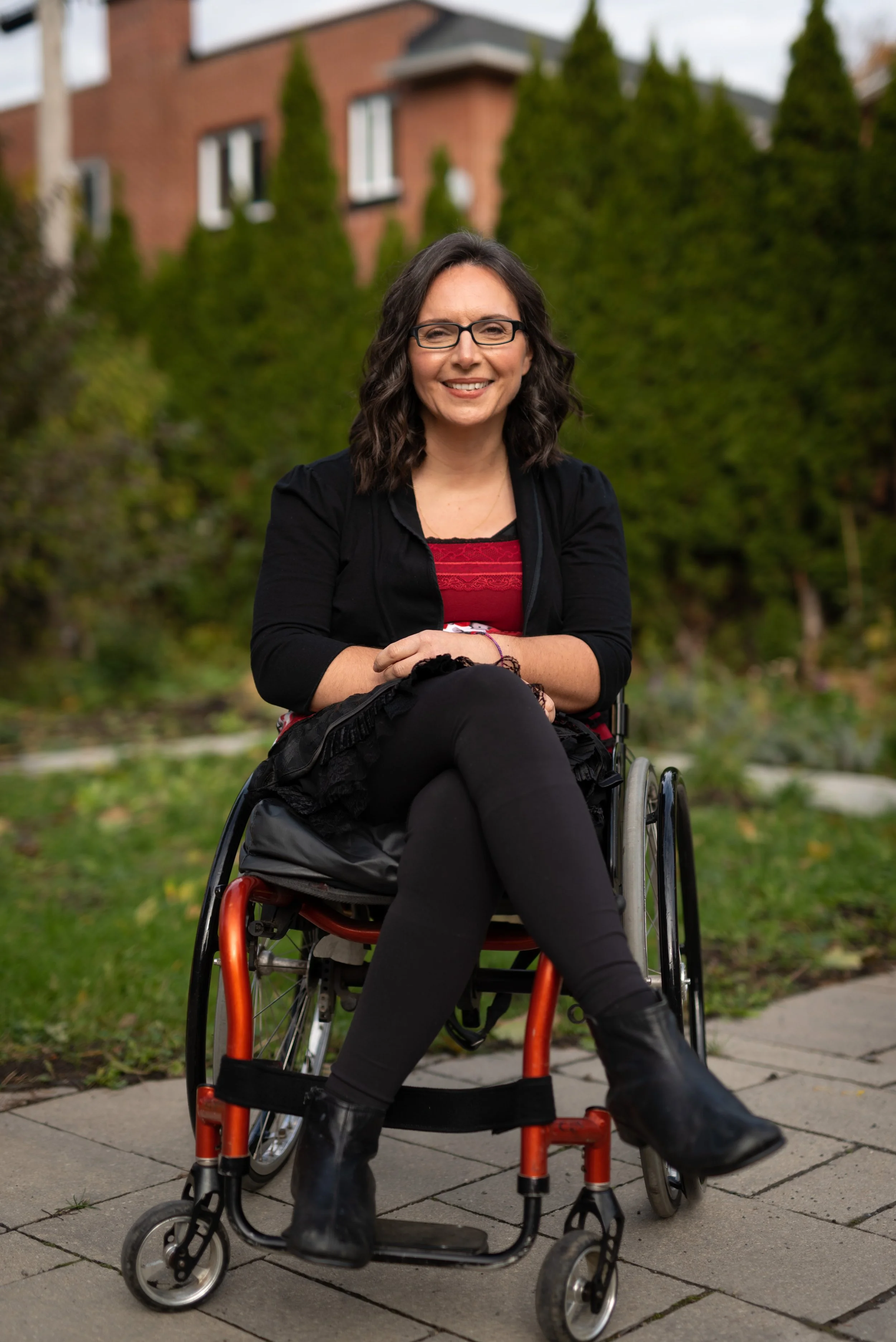
About the author | Marjorie Aunos, Ph.D., MAPP, (C’25) is a psychologist, researcher, professional speaker, and disability advocate who brings science, storytelling, and lived experience together to empower audiences to transform life's unexpected challenges into catalysts for lasting change. Marjorie is the author of Mom on Wheels: The Power of Purpose as a Parent with Paraplegia and a contributing author to We Got This: Essays by Disabled Parents. Her TEDx talk “What we can learn from disabled parents” has over 500,000 views.