Always November: A Conversation with Arik Housley
/
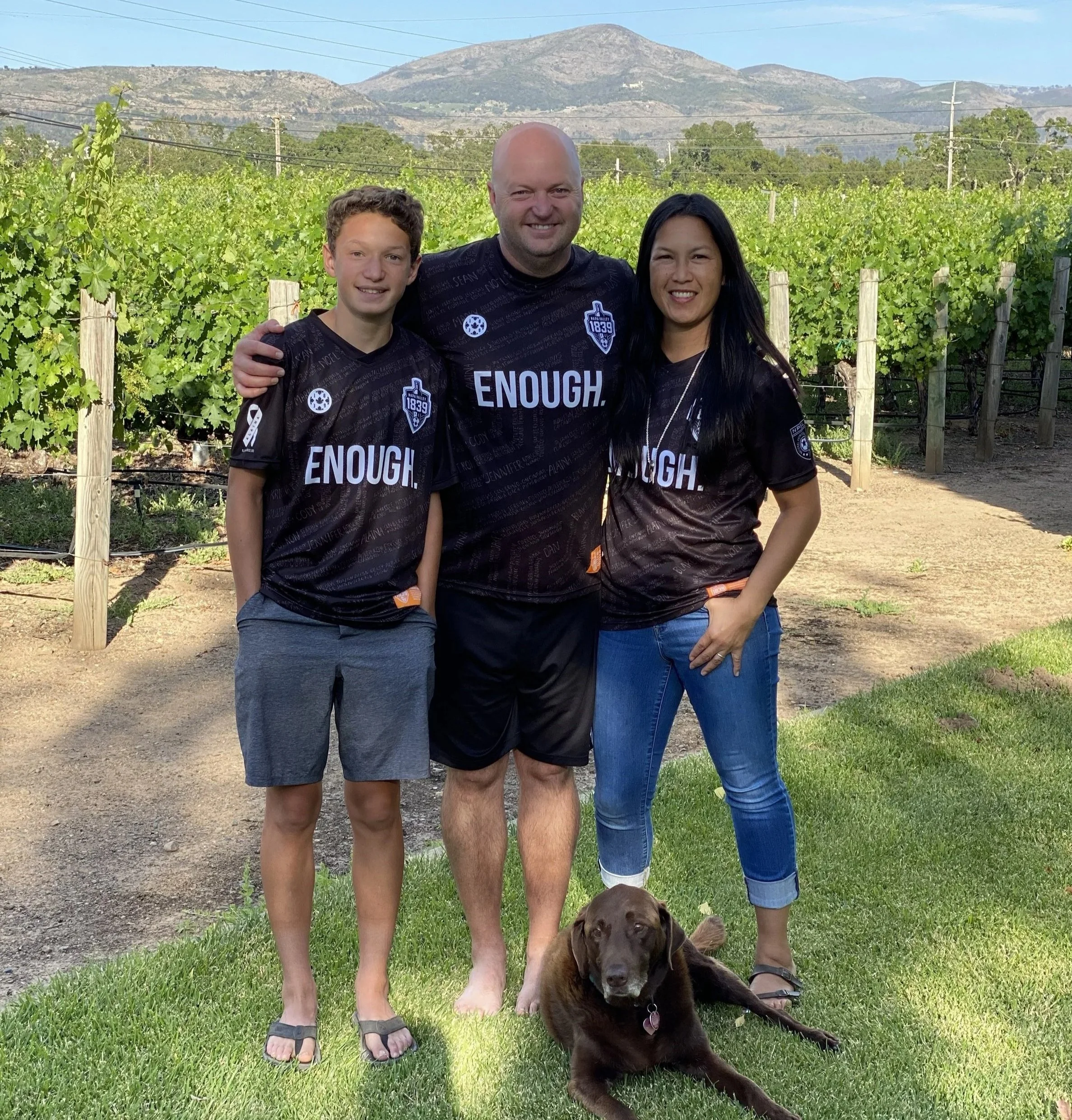
Photo used with permission from Arik HOusley
We suspect grief, sorrow, and loss aren’t the first words that come to mind when you think of positive psychology. And yet, they’re fundamental aspects of the human experience—and for many, a reality of the holiday season.
In this issue of MAPP Magazine, we sought to explore where positive psychology sits beside suffering. To make space at the holiday table for celebration as well as lament. When you’ve lost a child or the use of your legs. . . When you’re facing a life-altering diagnosis or life-shattering heartbreak. . . When you’ve lost your way, can barely breathe, and well-meant platitudes and pep talks not only fall short but intensify your pain. . . what then? What does the best in us look like when we’re navigating the worst?
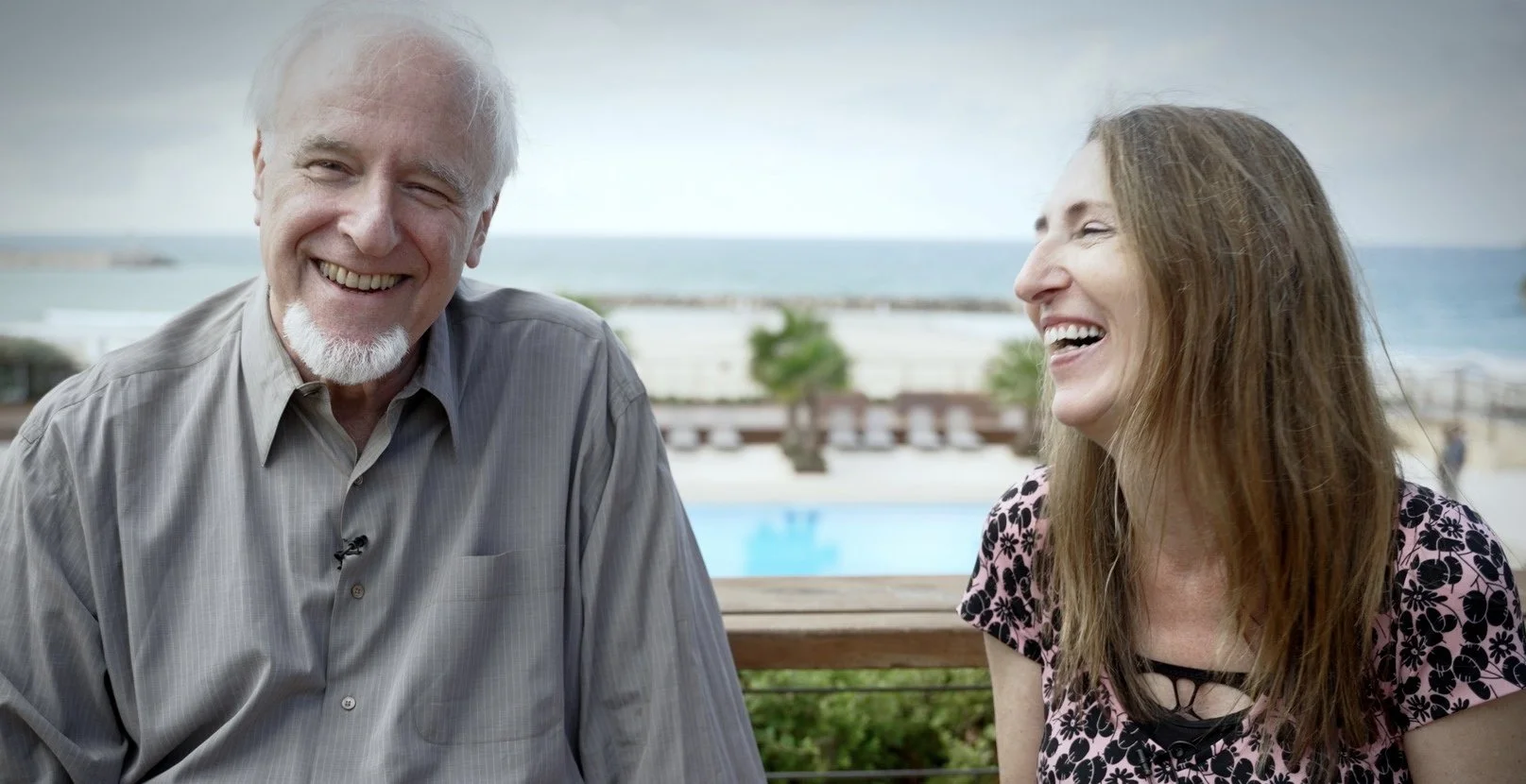
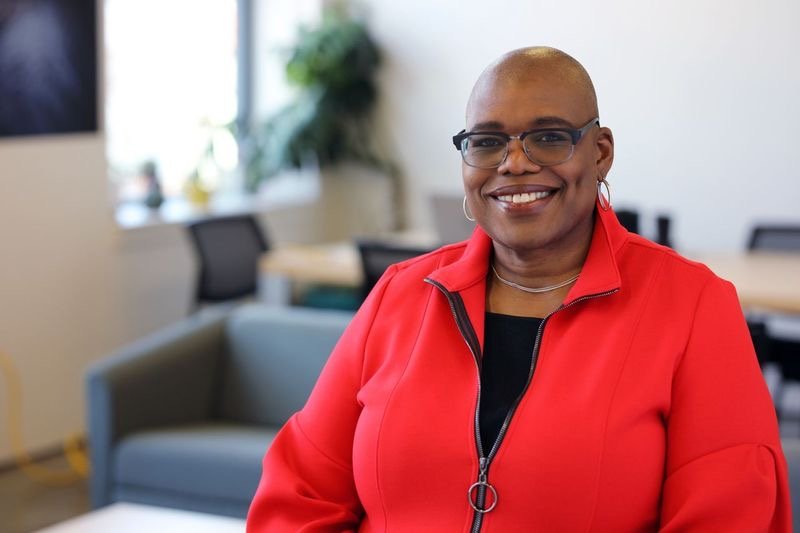
We’re grateful to recent graduates of Penn’s Master of Applied Positive Psychology (MAPP) program, Holly Holbrook (C’25) and Marjorie Aunos (C’25), for going there with us. And in this, our last issue of 2025, we’re honored to share their work alongside our conversation with speaker and author, Arik Housley, whose daughter was murdered in a 2018 mass shooting and whose own lived experience since then has been one of love, loss, and growth.
Admittedly, this isn’t your typical holiday issue. And frankly, where positive psychology is concerned, we’re hoping to change that.
Amid both beauty and ashes, we wish you a peaceful holiday season.
Warmly,
Abi + Josey
MAPP Magazine (MM): Please tell us about yourself, your story, and its intersection with positive psychology.
Arik Housley (AH): Yeah, for sure. My name is Arik Housley. I am an author, public speaker, entrepreneur, and owner of many different businesses over the years. And I am a father of one now. We lost our daughter in a mass shooting in November of 2018. And our experience, in the very short version, was one of posttraumatic growth (the positive change that can follow crisis or traumatic life events, Tedeschi & Calhoun, 2004).
We immediately were in the stage of acceptance in sorrow. But also, we were blessed in so many ways through the new relationships, the personal strength, my spiritual journey, and all the things that kind of fit that. The appreciation. . . you know, all the things that fit those five [areas] of posttraumatic growth.
We didn't really realize or know what it was until four years later when somebody looked over at me and asked, “Have you ever heard of this?”
And that's how we find ourselves where we are today.
MM: Thank you, Arik. As much as you’re comfortable sharing, will you please tell us more about your daughter, Alaina?
AH: Yeah, so, Alaina was our firstborn. My wife, Hannah, had a couple of miscarriages, as many women do, so we realized the preciousness of being able to have a child.
I was one of two boys—from a small family—so I didn't know what it would be like to have a daughter. Immediately, she had me wrapped. We were very close. And she was her mother's daughter, like exactly. Spitting image. Rule follower. Avid reader. But we had just an amazing relationship.
She chose to go to Pepperdine. There was consideration of some other schools. To give you a short story of how we work as a family, she was trying to make a decision. She had a really good offer from Gonzaga and a slightly better, more expensive offer from Pepperdine.
So, I made her a SurveyMonkey with a whole bunch of questions, like, “In your free time, would you rather go to the mountains, go on a hike, go to the ocean, lay in the sand, or smoke weed with your friends. . .” She took the survey, then she asked me if I could share it with all of her friends!
Deep down, I knew she was not an outdoorsy/hiking type of person. I knew she wasn’t gonna love the cold weather long-term. And… I told her, “You’re gonna make it wherever you go. You’re gonna have to make the best of it.” So, she chose Pepperdine.
Things weren't going great for her at first. She didn't get the sorority or choir she wanted, and all of her suitemates were getting bids. She was upset. But then she got accepted to Pepperdine’s Italy program and accepted in the Mock-trial program the week before the shooting. . .
We had some cool stories post-shooting. One of them was from the Mock-trial coach. She said she walked into the classroom and up on the board. One of the sides had everything mapped out already.
And [the coach] walks in and asks the captain, “Who did all of that?”
And they're like, “Oh, the new freshman girl, Alaina.”
The coach says, “Oh my gosh, you've got a future captain!”
Right away, they saw how engaged she was. We received so many wonderful stories [like] that.
So then, November 7th happened. We encouraged her to go out that night. She was at my fraternity brother's house for Convocation. He's a religion professor on campus.
[He and his wife] called us at 12:36 in the morning and informed us that there had been a shooting. That they were still praying that everything was okay. There was a lot of chaos, but at that point, it was already an hour and 14 minutes after the shooting.
You think, “Well, if my phone number is on speed dial, does she really know my number? Because it's been on favorites forever. . .” But every minute that ticked by. . . we pretty much knew immediately. And then it was just. . . It was just the process of grieving. Of going through—going through—everything.
MM: Thank you, Arik. We don't take this lightly and really appreciate you coming truly and fully and sharing with us.
AH: There's no off-limits stuff for me. If you want more details, I can give you what I have. If I can't answer it, I'll tell you I can't answer it.
MM: Fair enough, thank you.
As we shared, this issue of MAPP Magazine is about grief, trauma, loss, tragedy, suffering, sorrow. . . concepts we don't commonly think of when we talk about positive psychology. And yet, for most of us, they are or they will be a part of real life. So, as you see it, what’s the role of some of these harder parts of the human experience in the good life?
AH: Oh, wow! Drop a question on me.
Did you ever see the interview of Anderson Cooper interviewing Stephen Colbert?
MM: No.
AH: Both Anderson Cooper and Stephen Colbert lost their fathers at the age of 10. Stephen Colbert lost his dad and two brothers in a plane crash. And Anderson Cooper lost his father at age 10 to a heart attack. At age 21, he lost his brother to suicide.
Very emotionally, Cooper says to Colbert, “You've been quoted in saying, ‘What punishments of God are not gifts?’” [Cooper] asks, “Do you really believe that?”
And Stephen Colbert says, “Yes, it’s a gift to exist. And with existence comes suffering. There’s no escaping that.” It’s a gift. Even the painful ones make you realize how much love you have and how much love there was.
It's not perfect. Nobody loves it, but it's still a gift, right? I'm not doing it justice, but you should really see it. It resonated with me immediately. Because that's kind of how we live our life. We feel very fortunate to have had 18 years with Alaina. You know, like Hannah said in the very beginning, “Alaina was in the right place at the right time when Evil walked in.”
We don’t think she did anything wrong. We don't look at this as anybody else was doing anything wrong there either. We've forgiven—I've personally forgiven the shooter. We don't know details and chose not to get into that, because none of that would change the outcome.
We did not identify her body, because when I woke up with nightmares, those. . . those nightmares were never real, because I didn't picture my daughter laying lifeless. We knew she died of multiple gunshot wounds. How much damage that did, who knows? But those visions weren't real. That helped me sleep at night.
I think for about 7 months, I woke up at 12:36 in the morning every single night. And if I didn't, I would wake up at 12:38 a.m. Something in my psyche was waking me up.
We were blessed with 18 years, and you couldn't give me somebody else for a lifetime instead of Alaina. I wouldn't take it. Does it suck? Absolutely. It absolutely sucks. And we miss her. But we wouldn’t change it. We wouldn’t change it because we can’t.
Does that answer your question?
MM: It does.
AH: Your question was. . . Your question was very deep.
MM: Sometimes the best answers are references to other things—things we can pull in from others and make sense of. So yes, thank you for your answer. Beautifully said.
AH: Thank you.
MM: Our next question is about grief. As you see it, what is grief, and what does it look like to “grieve well”?
AH: We can look at other cultures. But here, we don't grieve well. We're so afraid of it.
And I say grief isn’t always the loss of a loved one. It could be loss of an occupation that you worked your whole life for, loss of a business during COVID, loss of a relationship, of a marriage. . . People can grieve all of those things. And I don't believe we should rate grief. Mine doesn't get a 9.5, and yours is only a 3.
Grief is grief, right?
It's something in life that none of us are going to get out of. Like birth and death. It just makes me aware that I need to be more present. . .
We've had plenty of signs that have happened that make me know that there is a lot out there that we don't know. That we can’t explain. That we have to just be okay to let go of and let happen. This is what grief has taught me: to be open-minded.
I'll give you an example. Prior to Alaina's murder, I had friends of [many religions and faiths], and I'm looking at all of them going, everybody's wrong except for one of you, and I don't know who it is.
But now, I look at it the exact opposite. What if none of them are wrong? What if we're all on a faith journey of our own? And maybe that faith journey—even for people who are agnostic or atheist—is a faith journey in a different way? Faith is believing. It isn't black and white, you know? Grief has really taught me a lot of those lessons.
MM: As you reflect on the last 7 years of your story, what has helped or is helping you to heal? And secondly, as you look back on the last 7 years, is there anything you would have done differently?
AH: Wow. To answer the first part of your question, what's helped me heal is we believe that. . . that we were immediately embraced by God's love.
When I say immediately embraced, I mean by the Pepperdine community, the Thousand Oaks community, the Napa community.
There was just so much love surrounding us. It’s really the only way we could have skipped the stages of grief. I mean, other than His grace. And I say that because I had so many question marks.
My wife is a very strong Catholic, and Hannah's faith and me standing and walking with her in this process has been a big thing. On days when I was struggling, she helped lift me back up, and then vice versa. There were days that I could be there for her. And same thing with our son, Alex. We had so many people around us that were just lifting us up when we needed it. It was just this outpouring of love.
I'm still convinced that even the stupid things that people said were intended with love. You know, everybody's just trying to relate because they feel for us. And so, I never took those things personally, because I knew their intentions were good.
And what would I do differently? I don't know if I would do anything different, to be honest.
If I were to say one thing, I'd say I'd love to have finished my book sooner and been able to get out and start speaking sooner. But time has allowed me to hone my message. It's a marathon, not a sprint.
It’s so fulfilling for me to help people in their journey. . . If I would have just done this right out the gate, I probably would have had a very different message. But I think it’s been able to be refined and hopefully even more helpful.
MM: Thank you. So, many of our readers are alumni and practitioners of positive psychology—across cultures, geographies, and industries. And as we said before, these topics aren’t often talked about in positive psychology circles. So, we’re curious—as it relates to grief and loss, what would you like these practitioners to know?
AH: Oh, wow. One nugget?
My suggestion to people helping others is to help them learn to tell the stories that are hard to tell. Stories that make you smile, laugh, and even make you cry.
People come into our lives for a length of time—for us to learn something. And so, every day and in every interaction, we can learn something.
Yes, talking and telling stories. . . like, on Alaina's birthday. We'll have a dark chocolate dessert, which was her favorite—anything dark chocolate. But we don't have candles and sing to her. We're not celebrating her birthday; we're communing. . . we're getting together as a family and celebrating being a family and the time that we had. Usually somebody says something, and we all end up in tears. But then, we all start making fun of each other and joking around.
I would encourage practitioners—encourage people—to be able to bear the weight of speaking about them.
The way I describe it is I have a beach ball that every day I will carry for the rest of my life. And it's actually more energy to try to hold the ball underwater than to actually carry it. I'm gonna carry it with me for the rest of my life. It's not so heavy that I can't, but if I try to hide it and pretend it's not there, that just makes it much harder.
So yeah, I guess my suggestion would be to help people understand that there's no getting away from it. So, how do you accept it, own it, and move forward with it, because we never move on without it?
MM: You recently released a book, Always November: Lessons in Love, Loss, and Resilience, and we wanted to give you space, if there’s anything you’d like to share with us about it.
AH: Oh, thank you.
It came up because my wife saw me consoling individuals that had lost loved ones, and they were stuck in their grief.
I guess unfairly to others who are probably trying to do the same thing, I'm given bigger grace from those people, because I can say things that might be [perceived as] offensive if somebody else said them. . . I feel like I get extra leeway. I guess I've earned it.
So, Hannah saw me spending a lot of hours with people. She could see how mentally and emotionally drained I was after long conversations, because I was very engaged and empathetic.
She asked me, “Have you considered writing a book? Because you can't do this three times a week. It's a lot for you…”
In December 2022, Hannah asked me to go to a women-in-fiction book reading. I asked, “Are you asking if I want to go, or are you asking me to go with you?” Different questions. That night, I joined Hannah and met two authors who introduced me to Scarlett Lewis, who [leads] the Choose Love Movement.
Scarlett lost her son, Jesse, in the Sandy Hook shooting, and her whole movement is based on four pillars: courage, compassion, gratitude, and forgiveness.
She was the only parent who did not sign the Sandy Hook Promise.
She said, “This is not about guns. . . Adam Lanza was bullied, abused—both physically and mentally—and fell through the cracks for 20 years. He was able to buy multiple guns and kill 20 schoolchildren and 6 adults.” And she's like, he fell through the cracks. What if we have some of that to blame [on] ourselves?
I’m sitting there with her on a podcast, like, “Holy crap, did you just say that?” I mean, she's not wrong, and I totally can respect her opinion, but that was mind-blowing for me.
In the process, I've met some amazing people. The authors from that night introduced me to my writing coach, Holly Payne, who helped write the book. Holly basically said, “Arik, you're a storyteller. Can you tell me, like, 40 stories, and then let's figure out how they’re gonna come together?”
The book is in two parts: The Unthinkable, basically from the time we got the call, and The Thinkable, [which is] mostly about posttraumatic growth. . . One of the chapters is New Relationships. It talks about the people we’ve met that we wouldn’t have if this hadn't happened. It’s trying to find the positive piece in such a dark time.
So yeah, that's [a bit] about the book. I’m very excited about it.
It got #1 in new releases on Amazon and Bestseller in multiple categories. It's a better reception than I expected. The book was a big piece for me to tell my story, but also, to help me in the speaking side. I'd do this for free if I didn't have to quit my other job to do it.
[Speaking is] really fulfilling for me, and I really enjoy it. I want to give back wherever I can, because that's what was given to us.
MM: That’s amazing. Thank you for sharing, and congrats on your book. That's really exciting, and we're happy to promote your book as well. So, what comes next for you, Arik?
AH: For me? I want to start speaking more—to try to help people in their journeys. I've taken a bit of a hiatus to finish the book and to help take care of my parents.
But I really want to try to get back out there. I think our world could use a little bit more positivity—especially in areas where people are really struggling.
I’m kind of going with the flow and seeing what happens, you know? As we learned with Alaina's murder, nothing is as we planned it.
Hannah and I joke about it. If you [asked me] when I was 16, who I thought I would marry, what she would look like, where I would be living, and what I would be doing— it is not anything remotely close to where we're at. And that's okay, right?
One other thing I didn't say earlier is I find a lot of people trying to push down that beach ball. Like a friend who lost her 4-month-old granddaughter. [My friend] was just cooking for everybody—trying to nurture everybody. It was her way of trying to control, because she didn't want to be in the moment. But you have to be in the moment.
The best advice we got was from one of the chaplains when we were informed [of Alaina’s murder]. He said, “Don't worry about tomorrow, next week, or next month. Worry about right now. If you're tired, sleep. If you need to cry, cry. If you want to go for a walk, go for a walk. Don’t overthink it.” [Oftentimes], when you see people trying to hyper-control it, they're suppressing that grief.
But at some point, you have to come to grips with the fact that this person has passed, that this business is gone, that this thing in my life is different. It doesn't mean you can't love and miss it, but you also have to be able to accept a new normal.
Within reason, I want to try to get out and help other communities. Because sadly, there are more shootings, [there are more] tragedies, and there are just so many people out there and so many communities that really need to have some of these conversations. Some of them might not want to be involved, and that's okay, too. We all do this differently.
MM: Thank you, Arik. Is there anything more you’d like to share or anything else you wish we would have asked you about?
AH: No—no, I think you got it all.
I think the only thing I would say is, I love that Penn has this program. I think that there's so much to be learned from positive psychology and positive mindset—especially post-grief, but also in our every day.
There are so many people who have never learned about it. I'd love to see this taught at younger ages. Like the Choose Love Movement and the Shine Hope Company.
Alaina’s Voice (the Housley’s nonprofit) is working to bring the first Hopeful City to the West Coast.
Hopelessness and helplessness are the two key drivers for violence and suicide (e.g., Demetropoulos Valencia et al., 2021; Tonkuş et al., 2022). And so, this is a way to give a toolbox to individuals and curriculum to groups. To help shine hope in cities.
MM: Wonderful, Arik. We’re happy to share. How can our readers get in contact with you?
AH: My website is probably the best way to contact me. And there’s a link to get the book through Amazon.
MM: Such a pleasure to speak with you today, Arik. Thank you.
References
Demetropoulos Valencia, J., Cope, M. R., Ward, C. J., Jones, M. S., & Muirbrook, K. A. (2021). Hopelessness and Youth Violent Behavior: A Longitudinal Study. Deviant Behavior, 42(9), 1130–1144. https://doi.org/10.1080/01639625.2020.1724372
Tedeschi, R. G., & Calhoun, L. G. (2004). Posttraumatic growth: Conceptual foundations and empirical evidence.” Psychological Inquiry, 15(1), 1–18. https://doi.org/10.1207/s15327965pli1501_01
Tonkuş, M. B., Çalışkan, B. B., & Alagöz, E. (2022). The relationship between suicide and hopelessness in young adults aged 18-30: A systematic review. Journal of Psychiatric Nursing, 13(3), 253–262. https://doi.org/10.14744/phd.2022.76993
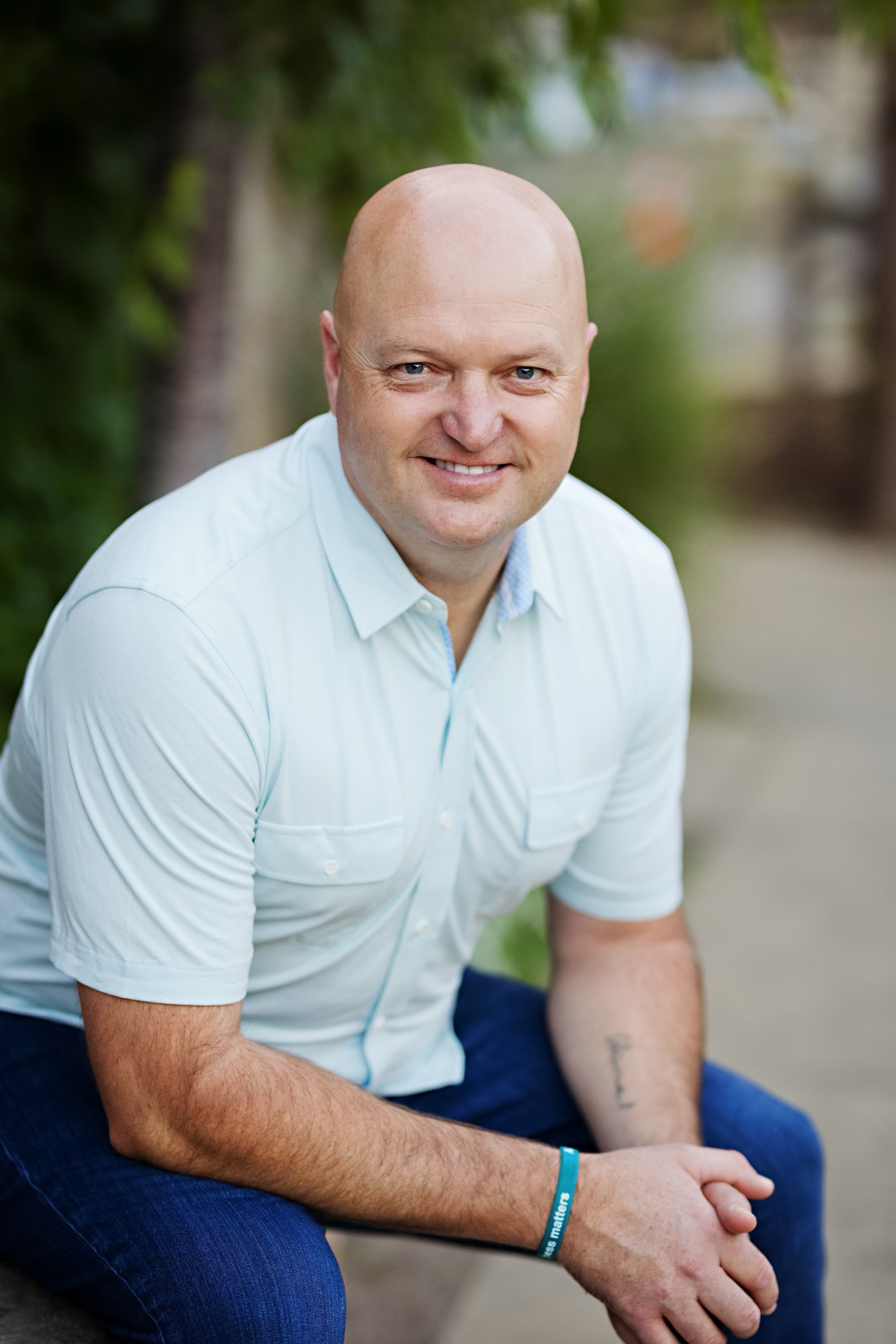
About our guest | For nearly 30 years, Arik Housley has been a pillar of Napa Valley, California’s business community. More recently, he’s become a speaker, advocate, and author passionate about helping people move forward post trauma and cultivate strength and compassion in the face of adversity. In his Amazon bestselling book, Always November: Lessons in Love, Loss, and Resilience, Arik chronicles his family’s journey through unimaginable grief and the search for hope after his daughter Alaina’s murder in a 2018 mass shooting. In her honor, he and his wife, Hannah, founded Alaina’s Voice, a foundation that promotes kindness, empathy, and mental well-being.