Narrative Identity, Generativity, and a President’s Psychobiography: A Conversation with Dan McAdams, PhD
/

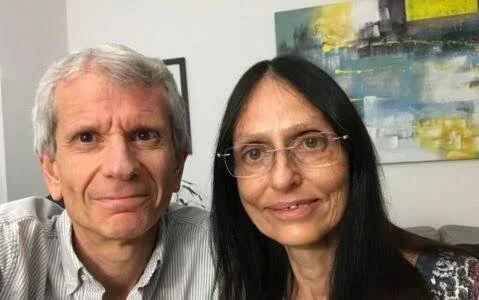
PHOTO used with permission from dan p. mcadams, phd
Storytelling has been around a while. Long before your parents, your grandparents, or their grandparents’ great-great-grandparents, parts of your own story have not only been told, they’ve likely influenced life as you’ve known it. And as you’ve read in this issue of MAPP Magazine, the stories we tell—and think—can also quite powerfully inform how we see and experience ourselves and what’s possible. Among the pioneering, most prolific, and most influential scholars to research these ideas—of life as story and identity as narrative—is Dan P. McAdams, PhD. To close this issue of MAPP Magazine, please enjoy our fascinating conversation with him.
MAPP Magazine (MM): First, we wanted to take this opportunity to thank you for your work. It has really impacted the work each of us does. So yes, thank you.
Dan McAdams (DM): Well, you're welcome, and it’s very gratifying. You know, when I started the work back in the 80s—actually long before positive psychology was a glimmer in Marty Seligman's eye—I was mainly in the academic mode and wasn't thinking about how these ideas might have impact outside of psychology departments. But over the years, things have spilled out, and so many others have taken up the narrative mantle and done interesting things. It's great that this work has had a positive impact.
MM: It really has. Thanks for meeting with us. To get started, will you please share with us a bit about your work and your story?
DM: Sure. So, I was trained as a personality and developmental psychologist at Harvard University in the late 1970s. I did conventional and somewhat interesting research in personality, then got my first teaching job at Loyola University of Chicago in 1980. Back then, I taught classes in developmental psychology to undergrads. And I organized my classes according to the stages of development of Erik Erikson—a great hero of mine.
If you know Erikson's scheme, one of those stages is late adolescence and young adulthood, where you're supposed to struggle with your identity. This idea of identity was new back then, and it wasn't clear what exactly it was. I mean, it just sounds like it's everything: It's who you are, and it's how you fit into the world.
So, reading Erikson over and over, almost as if it was a sacred text, I was trying to discern, what does he really mean? He saw identity as some way in your late teens and early 20s that you configure yourself into some pattern. And what does that pattern do? It provides your life with a sense of coherence. It integrates the past, the present, and the future as you imagine it. And I thought: But what does that?
If you could see an identity, what would it look like? What would it feel like? I used to ask the students in my classes, and we never came up with anything. Somewhere in there—it was clearly based on things I was reading at the time—it occurred to me that maybe what Erikson should have said is that identity is a story. It's this tale in your head about how you came to be and where your life is going. It's a fiction; it's a myth. It's meaningful and important and integrative and yeah, voila.
I've lived 72 years and had one insight. This was it! To me, it seemed like an intuitively cool idea. I didn't give up my day job doing my regular research, but kind of on the side, I started thinking about this more and doing life story interviews with people, asking them to tell the stories of their lives and to divide their lives up into chapters and so forth.
What started out as an answer to a problem that arose in teaching eventually took over my research agenda. It took a while, but by the time I got to Northwestern in ‘89, people’s life stories was the main thing I was interested in studying. And I have been interested in and explored narrative, what is now called narrative identity, in different ways ever since.
For a long time, nobody was really interested in psychology; nobody seemed to notice. But eventually, starting around 2000, a number of other people picked up these ideas, and it started to take off.
I'm still deeply embedded in the field of personality psychology. It's my home discipline, personality and lifespan developmental psychology. So, when I think of my audience in a professional sense, I'm usually thinking of those people.
MM: Excellent, thank you. So, how would you say that your understanding of narrative identity has evolved since you started researching it?
DM: When I started out in the 80s, I was pretty naive. I mean, I kind of knew this wasn't right, but nonetheless, I still imagined that each of us is like a Victorian novelist, right? Like you’re Jane Austen or George Eliot or Dickens. We all are working on these big, beautiful stories in our minds. To me, this was a romantic idea. I knew it wasn't really true, but it was compelling.
It’s almost as if the book's in the head. And if you could just get people to talk about that book that they're writing—implicitly, of course—you could get the text out of them. And then you could analyze the text the way you would with Pride and Prejudice or The Brothers Karamazov. You would go line by line and you would look for themes and structures.
I had a strong background in the humanities, so I kind of looked at making sense of these stories as a literary task. I think I kind of reified stories at that point, made them more concrete and coherent than indeed they really were. But over time, especially with the influence of other colleagues, I started to emphasize more the idea that stories are largely incomplete and fragmented, that they evolve gradually over time in different and unpredictable ways, that they are shaped strongly by relationships with other people, and importantly, by culture. Culture gives you a menu of plots and scripts and images and so forth, and you selectively choose. Of course, you're not free to do it any way you want because you're constrained by all kinds of demographic, internal, and physical characteristics. The constraints of history and time, right? So, we manage to muddle through it. It's not like writing a great American novel. It's more like trying to wrench some kind of coherence out of the chaos of everyday life through storytelling and in relationships.
A big thing happened for me around the year 2000 or 2001 when I started working on what I now call redemptive life stories. I had done this research on highly caring, productive, and generative midlife adults and wanted to understand their stories because I admired these people. I thought, “Well, you need a good story if you're going to commit yourself to the next generation in a positive way.” So, I identified this thing that I call the redemptive narrative. I thought: This is the kind of story that supports a caring and productive life when you're a midlife adult.
I gave this talk in the Netherlands, which was pretty well received. And then during the Q&A, a lady in the front row raises her hand, and she says, “You know, Professor McAdams, this is very interesting. We like this. But it really sounds very American to us.”
I got really defensive and said, “I think these stories are broader than that. Overcoming adversity isn't something that just happens in the U.S. . .” But on the plane ride home, I thought more about what she said and realized, yeah, she definitely was on to something.
Over the next few years, I did a kind of 180. I really did a deep dive into American cultural history, heritage, biography, and things I've always been interested in anyway. I started to couch these ideas, not about story in general, but about a particular kind of story, these redemptive stories about overcoming adversity, going from bad to good, stories of atonement, stories of recovery. They're not quintessentially American, but there's a certain American flavor that some of them have. I think it's really important to think about the cultural framing of certain kinds of stories. I think that's the big change over time.
Originally, I thought Erikson was almost like God. I'm doing exegesis of great sacred texts, Young Man Luther, Childhood Society. What did Erikson mean? And I'm always reading between the lines, because that's how I was taught to read. And I'm thinking, well, he didn't say it, but what he really meant—if we could just resurrect him from the dead, although he wasn't dead then—he would say, “You know, Dan, identity is a life story in your mind.” Well, of course he never said that. But early on, I think I anchored myself too much to Erikson.
Eventually I started to see how what I'm talking about is different from what he said in many ways, but in other ways not. And we kind of branded it as not so much Erikson, but more about narrative identity. But then over time, I also started to see, it's not like that's the only way identity works out. There are all kinds of meanings of identity. For a while there, I was thinking identity is a life story. Nothing else is identity. And now—of course, there are many different ways to think about identity. But narrative identity is an interesting one, especially because of the temporal dimension—the past, present, future kind of things that stories enable you to encode. And also, because I think it's such an interesting and compelling psychosocial task to create a story for your life beginning in the late teens and early 20s. But of course, it continues throughout [life]. You don't stop doing it.
MM: You’ve made so many interesting points. I think especially the sort of American flavor you recognized in those redemptive narratives. Context is so important. So, if you were to write the script, where might you situate story in the science of human flourishing?
DM: It's interesting. I don't think as much about the science of human flourishing as a good positive psychologist should. And that's because, you know, I'm not a positive psychologist. I'm kind of negative, actually. I mean, Freud had a big impact on me when I was a teenager. And I see the glass as half empty. A lot. And I like the tragic dimensions of life.
Nonetheless, we do work in which we look at positive things like generativity and well-being. I tend to think of stories more in terms of where they fit in the big picture of personality, which is all these things that make us unique. And I see them as one of three kinds of major components.
There's personality from the standpoint of a social actor, which is like, what are my basic traits that shape how I play my roles? Am I extroverted or introverted? Am I more neurotic? There's a whole language and a science of dispositional personality traits that are foundational to personality and important for flourishing. I mean, certain traits like conscientiousness and emotional stability are associated with flourishing, right?
There's a second level that's about goals and values, what I call the motivated agent. So, you've got the social actor, and you've got the motivated agent. And somewhere along the way, around age six, seven, eight, or nine, somewhere in there, we become self-conscious motivated agents. As seven- or eight-year-olds, we start to set up little goals for our life, things we want to do. It's little stuff at first, but gradually, it works and expands into life goals. There's a whole set of constructs that are about what you want in life and how you pursue it, what your values and goals are. And that's related to flourishing too.
Finally, at the third level is the autobiographical author, narrative identity, which begins in late teens, early 20s. So, there's this kind of developmental sequence. When we start out in life, all we’ve got going for us in terms of personality is these basic temperament traits. I mean, one-year-olds differ from each other in terms of how smiley they are, how outgoing, how much effortful control they show. This is really basic stuff. And then we build on that and we develop goals and values later that layer over our dispositional traits. And then eventually personality thickens yet again in our teens and 20s and later. When we put together a narrative, we go from actor to agent to author. And flourishing can be understood at all three levels.
MM: Thank you for that. So, in a 2019 journal article you wrote, “For there to be a story, a human or human-like agent must act to accomplish a desired end” (McAdams, 2019, p.2). In your work, what actions and ends have you observed that tend to lead to the best life outcomes?
DM: Thank you for pulling that up. The point in that quote is that authorship depends on agency. Long before we start thinking about our lives as stories, we start setting up little scenarios in which agents pursue goals. It starts with what developmental psychologists call theory of mind, and these other developments that occur in age four, five, six, where you start to understand goal sequences. Stories are accounts that we create that kind of spell out those goal sequences. And so, even at ages five and six, we can tell stories.
To answer your question in the context of flourishing, you have to sort of take a value stand. And I think everybody's different here in terms of what they value in life. For me, I just feel that there are certain values that, if you're fortunate enough that you're not like fighting to defend yourself every moment, if you know where your dinner is going to come from the next day, if you have a basic level of well-being and safety as you move into your adult years, well, what are you trying to accomplish?
I think in many cases, what is most important is having a positive impact on the world around you—leaving something positive behind—what Erikson called generativity. And so, I have a hard time thinking of flourishing without having an agent who's pursuing goals that will outlive the self in a positive way.
I know there are other ways to think about it, but from my point of view, I'm not sure positive psychology emphasizes this enough: how we relate to and have some positive impact on the next generation in the way we live our lives. That, to me, is paramount, which is one of the reasons I'm so interested in these redemptive life stories that highly generative Americans tend to tell. I do think those stories help you to create the kind of scenario whereby you are moving forward over the landscape of consciousness and time in such a way as to leave a positive impact. Not in a selfish, I-want-to-live-forever way, although there's a little bit of that in it, but more in terms of offering a gift to the world. Erikson writes beautifully about this when he writes about generativity.
Do we all have gifts? I don't know. But it's great to feel that you might be able to offer a gift to the world in some way. It doesn't have to be grandiose. It can be very small. I think that’s a compelling way to think about a well-lived life.
MM: Can you comment on the role of narrative identity in groups and in collective flourishing?
DM: Yeah, there’s a lot of interest in the social sciences, in the business world, in schools of management, in the kinds of stories that organizations create to define themselves. Of course, an organization could be anything from a small corporation to an international conglomerate. It could be a church or a school. I mean, we are social animals and we are involved in all these different social groupings and organizations and institutions. And if you want to take the narrative idea all the way out there, many of these groups and institutions and organizations suggest a narrative and in some cases are very self-consciously explicit about it.
You have companies that have mission statements. You have organizations everybody knows that started three generations ago. . . It's part of human nature to not only see narrative in our own lives, but to see it in the groups and institutions that we affiliate with.
How do you study these things from an academic standpoint? To me, this is a huge conundrum, which is one of the reasons I don't do it. I just don't know, how do you get the story? I mean, I can talk to a person and just take it on faith that what they're telling me is more or less consistent with their self-conception. But what about a church? Let’s say there are 200 active congregants every Sunday, and this church has been meeting around 100 years, and they've got a pastor, and a choir. . . Where's the story? Is it the story that the pastor tells about the church? Is it something that you could discern based on the kinds of hymns that are sung? I mean, I just don't know.
But I think there is certainly a lot of credence in the idea that, like individuals, groups oftentimes make meaning and create identity through narrative. And thus, when groups conflict, trying to understand the other group's story might help to diffuse some of the toxic enmity that rival groups seem to experience today—along political lines, cultural lines, educational lines. . . There are so many divisions now, and there's no magic way to make everybody sing Kumbaya and live happily ever after. But it might be useful to try to take a narrative lens to understanding the other, not only in terms of their explicit characteristics, but in terms of the stories that they're living by.
MM: Thanks for offering that perspective. A bit of a pivot here: Storytelling is commonly thought of as oral, written, visual, or a thought process. As such, many narrative interventions tend to be neck up. As you see it, what might integrating some neck-down approaches to narrative well-being or narratives in general look like?
DM: Yeah, right. I'm kind of a neck-up person, but I do kind of get the neck-down to a certain extent. I have a strong background and grew up in religious contexts. And there's a lot of neck-down there with prayer and dance and movement and ritual and liturgy and the things you do with your body and so forth. And surely, we can tell stories that way.
You don't need language to tell a story. Language may give us more precision in the way we tell stories, but a lot gets lost too. The rhythm of movement and non-linguistic expressions can convey narratives, plots, characters, and themes, sometimes in a more powerful way. I mean, music is certainly not purely linguistic. Why is it that certain musical compositions and performances move us in so many different ways? Sometimes they excite us, and they put us into an almost deliriously positive state. Other times, the sadness is so overwhelming that it almost feels good that it's so sad. It’s not like I'm thinking rationally about what this music means, but I find myself tearing up and getting the chills. And there's some narrative, para-narrative kind of stuff that's going on there.
Jerome Bruner made a great distinction many years ago between what he called narrative knowing, the narrative mode on the one hand, and the paradigmatic on the other. Narrative is storytelling, but the paradigmatic, which is just as important, is text and discourse aimed at explaining the world in physical and chemical terms, like how does my car work? And what's the origin of the universe? And how do we understand our economy? Those aren't narrative questions. Those are paradigmatic questions. You go to school and you learn how to test hypotheses or fix cars or make a philosophical argument. And yeah, maybe you can use stories a little, but it's a really different kind of thing.
MM: In terms of constructing, reconstructing, and internalizing one's life story, what might you say to someone whose story contains chapters that are difficult to face or stories that feel too hard to tell?
DM: Yeah, well, this is a dilemma that therapists certainly face. I'm not a therapist, so I can opt out of that. There's so much that's contextual here when it comes to that question. I mean, I think there are times in life where you confront your story and there is a chapter and it's there and it's too terrible and you can't face it. And okay, you let it go for a while. I mean, this happens in grieving.
If I had a romantic breakup two days ago, I'm not ready to talk about it. I don't want to think about why it happened. I don't want to analyze it. I'm just trying to get by day to day. And in some lives, that might change. Some people maybe are never ready, and I'm not sure that's necessarily bad. I'm very reluctant, to tell you the truth, to kind of give prescriptive advice on how to live and how to narrate. I guess partly because I'm a personality and developmental psychologist rather than a clinician. I'm interested in documenting the variations. And there are so many interesting ones. But then to step back from that and say, this is how you should do it, I'm always reluctant to engage in that kind of discourse, even with respect to things like redemptive life stories. And I love redemptive life stories. In a redemptive life story, a person is delivered from their suffering to an enhanced status or state.
You have to have suffering for a redemptive life story to happen, and there's so many different ways in which we suffer, so there's no shortage there. And then different ways in which you can transcend it. You can maybe find growth in it. You can learn something important. You can gain an insight. You can reinterpret it and see what you thought was bad, now you think maybe it was good. Maybe it strengthened you. You can find silver linings. There are 1000 different ways to try to find positive meaning in a negative event. But sometimes you can't. And maybe it's an insult to the cosmos to try to do it. I mean, a parent loses a child. I mean, it's one of the worst things that can happen in life. Do you make a positive story out of that? Do you find a redemptive message? No. The Holocaust, are you looking for positive meanings there? And certain historical events are so horrific that to go back and say, well, but that led to something positive. . . That doesn't work for a lot of us.
I wrote in my book, The Redemptive Self, that about 85% of me loves [redemptive stories], but about 15% of me doesn't. And sometimes we try too hard to find positive meanings in negative events. Some people who talk about stories, I think almost make it synonymous with redemption. Does every story need to have some positive resolution, which means you learn something or something good comes out of it? I'm saying no.
Stories come in a million different flavors and shapes. And moreover, stories aren't always good for you. I mean, sometimes stories are really bad. I mean, propaganda comes in the form of stories. There are conspiracy theories out there that are really conspiracy stories. And I don't want to advocate for those.
So, I kind of plead the 5th on questions about what people should do when it comes to how they live their lives. I mean, unless they're my kids, in which case I just tell them, and they don't listen to me. But at least I get it out there.
MM: [Laughs] Fair. As a side, one thing we've been exploring relates to some of the things you’ve addressed. And sometimes sorting out how positive psychology applies can be a bit tricky, right? Sometimes, in grief or loss or betrayal, there isn’t a happy resolution. There isn’t resilience. There isn’t redemption. I think you make an important point, so thank you for speaking to that.
DM: Yeah. And betrayal, I mean, that's a great example there. That's about the trickiest one.
MM: Yeah, we could definitely go off on that. You can plead the fifth on this one too, if you want to. But many of our readers are practitioners across a host of contexts. And the MAPP program is really about application. So, I'm wondering about any practical suggestions you might offer in terms of applying a narrative approach to personal or collective well-being. To promoting generativity.
DM: Well, I think practitioners of many stripes are engaged in narrative interventions, whether they know it or not. I mean, we are storytellers by nature. And when we get together, we share stories. In a therapeutic context or a context of some kind of psychological or even societal intervention, storytelling is going to be front and center. So, it's not like we have to tell people to tell stories. But I think it helps to be aware of the parameters of narrative and to listen carefully to another person's story without assumptions about that narrative.
That’s hard to do the older you get. . . I've heard lots of stories. And so, somebody starts telling me one, and I'm thinking, “Oh my God, there you go. That's like number 2356.4.” You have to resist that. Not completely. It's not like you have to shut off all memory. That would be ridiculous. It's not like you're born again every moment anew. But I think being open to the uniqueness of people's stories is something that is a challenge for many people in the helping professions because they hear so many stories and are so committed to helping a person, to making it better.
I may get philosophical here, but when I was an undergraduate, I was quite taken with the writings of Martin Buber, a Jewish theologian who wrote a book called I and Thou, among others. He talked about what he called an I-Thou encounter. In an I-Thou encounter, you meet another person and you resist the temptation to analyze. If you use his term, the other person is not a dot in the world grid of time and space.
It’s not like you're a type. It's not like you're reminding me of my mom, my sister, my brother. I'm trying to see you in your utter uniqueness. Like I have never seen anything or anybody like you before. It’s so hard to do, but if two people can do that, even if it's for five seconds, Buber thought that was almost a transcendent experience because we're always analyzing and judging each other.
It's impossible to do, but trying to find that sort of I-Thou dynamic in the sharing of stories, I think works to the benefit of everybody. . . This is highly idealized, but I can imagine that in interpersonal experiences where people are sharing and there's some kind of effort in the encounter to help others or promote development, this kind of intensive listening and openness could certainly be helpful.
MM: That's amazing. And something I’d like to do more of. Even if it isn't unique, to see that uniqueness in everyone. So, as you reflect on your own life story and this idea of generativity, what feels most meaningful right now? Anything more you’d like to share?
DM: Well, in terms of my professional life, I'm kind of towards the end of my career here. I just decided recently that I'm not going to be taking any more doctoral students. So, my lab has shrunk a bit, and we'll be doing less research going forward, although I have all these former students and colleagues who are doing great work on narrative identity. So, I tag along with a lot of these projects and get involved from afar.
Professionally, one thing that’s become increasingly important is to take ideas from narrative identity and from personality more generally and, to a certain extent, other disciplines, and apply them to individual lives in what's called psychological biography or psychobiography. I've written two of them: George W. Bush and Donald Trump. I've written book-length interpretations of their lives and their careers. For me, that was fun. And interesting.
It gets me deep into American cultural history. I've spent a lot of time in the last three years reading big fat books on presidents. Ask me about Millard Fillmore. Or Chester Arthur. Or Lincoln, who's arguably the greatest man who ever lived and the most interesting person on the planet. I could read about him for the rest of my life.
So, I'm kind of dabbling, but more than that, I'm throwing myself into this. And I want to do something that applies ideas of narrative identity and personality more generally to not just one or two of these men, but maybe a group of them. To understand the psychology of the American presidency. This is my own current intellectual passion, I guess.
These days, I see my role as applying ideas more than coming up with new ones. I’m interested in taking these applications of current, evidence-based, scientifically valid ideas in personality, developmental, social psychology, evolutionary psychology, and applying them to understanding particular cases. In this case, presidents.
When I started writing about Donald Trump—it wasn't my idea; I was asked to do it by The Atlantic magazine about 10 years ago. They wanted me to do a psychological biography because they thought that he might win the Republican nomination to be president. I spent like four months learning everything I could about Mr. Trump. I knew nothing about him going in. I made a lot of interesting observations about narcissism and authoritarianism and different personality traits and so forth. But I struggled. I had my three layers of personality: actor, agent, author. I struggled with the author part. Like, what's this guy's story? Does he have a story in his mind about how he came to be and where his life is going?
I struggled with this back in 2016, and never really came up with anything good. Then eventually, I did a book on it four years later. Although I resisted this for a long time, eventually I came around to the idea that—this is one of the most interesting things about him from a psychological standpoint—he doesn't have layer three. There is no narrative identity. There is no story in his mind about how he came to be and where his life is going.
Other people have said this, but they haven't put it in a theoretical frame. In The Art of the Deal, Tony Schwartz says, Mr. Trump is really peculiar. He has almost no autobiographical memories, almost none. He talks about himself all the time, but he doesn't tell stories about his life. He also doesn't think of the future.
Stories situate you in time, past, present, future, beginning, middle, and envisioned ending. But that's not how Trump sees the world. And it's a radical departure. He is what I call the episodic man. He lives in the moment. And when we think, oh, wow, that sounds Zen, right? No, it's not Zen. He lives in the moment, fighting to win the moment. And each moment, each episode in his life, he's coming at you and fighting with you. He's not typically hiding anything. He's not playing a game. He's basically trying to take you out and win. That's what The Art of the Deal is about. That's what his second-term presidency has mainly been about.
So, when you live in the moment, when you fight to win the moment, you think, “Oh wow, life is a series of battles.” In fact, there's this quote from him from People magazine 50 years ago where they asked Mr. Trump, what's your philosophy of life? And he says, “Man is the most vicious of all animals, and life is a series of battles ending in victory or defeat.” (Trump, 1981, as cited in McAdams, 2020). So that's his philosophy of life. . . What I think he means here is that not that life ends in victory or defeat, but every battle ends in victory or defeat. And then you go to the next one. And they don't build. So, it's like we fight Gettysburg today. And then the next day, we're back in the Middle Ages. And then on the third day, we're doing World War II.
So how do you live like that? It's really interesting to me. Part of his appeal is that he's extraordinarily authentic. He is showing you everything right now. . . I actually think Mr. Trump is in some ways a one-off. I mean, he's the exception to almost every psychological principle you can come up with. But there is something you learn from him. And that is this idea of narrative identity. It's a continuum. It’s not like everybody goes through life creating stories to make sense of their lives. Most of us do to a certain extent. And some of us do it a lot, right? And others hardly do it at all. And that's okay.
Every once in a while, we’ve had interviews where you ask someone questions. They can talk about their life, but when you ask what they think it means? Or what does that say about you?” They'll say something like, well, “I guess I like for positive things to happen.” I mean, there's no insight. There's no autobiographical reasoning. Some people don't do much narrative identity work just by nature, by background. And maybe they don't need it. Maybe they can have an identity and get through life fine without it.
I mean, Donald Trump—whether you hate him or love him—either way, he's been successful. He’s one of 47 men who's become president of the United States, right? He's not in jail. I mean, he's the most powerful man in the world. . . He's actually done very well without a narrative identity. In fact, I would argue that's part of his appeal to a lot of people.
So, it might not be necessary to do this storytelling to the extent that I've thought many, if not most people, do it. In that regard, my case studies of [Donald Trump] have had an impact on how I think about concepts more generally.
MM: That is so interesting. We’d love to hear more about this, but will leave it at that and look into your book. On that note, how can our readers learn more about your work?
DM: Well, I mean, I don't do podcasts very much, and I'm not on social media. . . The way you find out about me, I guess, is to read stuff I've written. It’s real old school. But yeah, I think it's the stuff I've written, and I'm very proud of that. I think my book on Trump is really great. Even if you have no interest in the man, you learn all kinds of things about personality psychology in that book. In fact, it’s been used as a Psych 101 textbook at a few universities as a way of learning basic ideas in personality and developmental psychology. I also learned, by the way, that it's been banned at one particular institution that will not go named, so I feel good about that. Who would have thought it? I think you've arrived when one of your books gets banned!
So yeah, there's stuff I've written: The Redemptive Self and The Strange Case of Donald Trump. Those two books are probably the ones that get across my work in the clearest way. But they’re big fat books. And who reads books anymore? I don't know. You do. You folks probably read.
MM: Yes, we read. [Laughs] And this—this has been great! Thanks so much for your time today, Dan. For sharing so authentically with us. We just love the happy surprises of interviews that go in directions we weren’t expecting.
DM: Well, I wasn't expecting this either! You never know what's going to come out.
MM: You never know! But we enjoyed the conversation very much.
DM: Your questions were great. I appreciate it. Thank you, Abi. And thank you, Josey.
MM: Absolutely. What a pleasure to speak with you. Thanks again for your time.
DM: My pleasure. Have a great day.
References
McAdams, D. P. (2019). “First we invented stories, then they changed us”: The evolution of narrative identity. Evolutionary Studies in Imaginative Culture, 3(1), 1-18.
McAdams, D.P. (2020). The strange case of Donald J. Trump: A psychological reckoning. Oxford University Press.

About the expert | Dan P. McAdams is the Henry Wade Rogers Professor of Psychology and Professor of Human Development and Social Policy at Northwestern University, Evanston, IL. In 2022-23, he served as the Interim Dean of Northwestern’s School of Education and Social Policy. Professor McAdams received his B.S. degree from Christ College, Valparaiso University in 1976, and his Ph.D. in Psychology and Social Relations from Harvard University in 1979.
Author of nearly 350 scientific articles and chapters, numerous edited volumes, and 9 books, Professor McAdams works in the areas of personality and life-span developmental psychology. His theoretical and empirical writings focus on concepts of self and identity in contemporary American society and on themes of power, intimacy, redemption, and generativity across the adult life course. Professor McAdams is a leader in the emergence within the social sciences of narrative conceptions of human lives – approaches that place stories and storytelling at the center of human personality.
Professor McAdams is the author of The Redemptive Self: Stories Americans Live By (Oxford University Press, 2006/2013), which won the 2006 William James Award from the American Psychological Association for best general-interest book in psychology, across all subfields. More recently, he is the author of The Art and Science of Personality Development (Guilford Press, 2015); The Strange Case of Donald J. Trump: A Psychological Reckoning (Oxford, 2020); and The Person: A New Introduction to Personality Psychology (with William Dunlop, Wiley, 2022).
Professor McAdams is the winner of numerous professional awards, including the Henry A. Murray Award from the American Psychological Association for research on personality and the study of lives and the Jack Block Award from the Society for Personality and Social Psychology for career contributions to personality psychology, He is a founding member of the Association for Research in Personality (ARP), and he served as President of ARP 2016-18. His work has been featured in many national publications and media outlets including the New York Times, the New Yorker, The Atlantic, Wall Street Journal, USA Today, and Newsweek, and he has appeared on CNN, MSNBC, NPR, and many other television and radio venues.