Inheriting Collective Stories
/
I come from a people who love to tell long, delicious stories. We gather around tables overflowing with stuffed cabbages and neatly wrapped grape leaves, and talk for so many hours that we return home with hoarse voices begging for hydration. As a child (and now adult) of the Armenian diaspora, I became fascinated by the stories that my family introduced into every banal moment, the narrative version of injecting small doses of meaning throughout the day. A breakfast recipe became a reminder of how my grandfather liked his omelets (drizzled with honey, apparently), and a vase embellished with red carnations turned into a discussion on Armenian death rituals.
We all come from communities, and these communities come with their own nuanced and complex narratives about what it means to belong to them. These stories can become a part of our identities, weaving themselves into our own personal life narratives and helping us better understand our past, present, and future. Understanding how we actively interact with these narratives can help us both exercise agency in how we retell them and also unlock the unique sense of belonging and meaning that collective stories may offer.
The Passing Down of Stories
Narrative researchers understand narrative identity as the set of stories that we create about our own life experiences to create meaning and continuity (McAdams et al., 1996). This is mostly recognized as an individual’s reflection of their personal life experiences, with some acknowledgment that larger social structures shape our stories too (McAdams, 2001). Our life stories, however, aren’t solely constructed from personal experience. Before we even have the developmental capacity to reflect on our lives, we are exposed to an overflowing basket of information that serves as a template for what it means to be a member of our groups. While research has primarily focused on how we relate to events we’ve experienced firsthand, the power of relating to and interacting with stories we inherit from others has largely been unexamined.
Though I grew up in New York City, thousands of miles away from my native soil in Armenia, I often tell tales I’ve absorbed from family, friends, cultural resources, and institutions. I have cherry-picked these over the years from my community’s collective memory, the shared narratives and knowledge that shape a group's collective identity and sense of belonging (Coman et al., 2009). Many of these stories are passed down over generations, and interacting with them has various psychological benefits. For example, adolescents who grow up in families where intergenerational stories are told around the dinner table report higher emotional well-being (Fivush et al., 2011). This collective memory is dynamic and malleable, open to being recreated and reinterpreted by the people who shape it (Irwin-Zarecka, 1994; Wertsch, 2002). Within this larger collective memory lies a set of culturally shared dominant stories, known as master narratives, which guide how members relate to and understand their culture (McLean & Syed, 2015).
While these larger narratives can be passed down from institutions, books, or family, not all of the information makes it into our personal narrative. Researchers use the term collected stories to describe the narratives about other people’s stories that individuals gather and integrate into their own lives (Schiff et al., 2001). These collected stories can hold personal significance, even when the events were not directly experienced (Schiff et al., 2001). Qualitative interviews with descendants of Armenian genocide survivors found that when recounting stories about past family members, participants used the first-person plural “we” despite not having experienced the event themselves, suggesting a personal identification with passed down stories (Azarian-Ceccato, 2010). Although these stories emerge from a shared collective memory, individuals choose to retell the parts that resonate most with them. While I have learned and participated in the retelling of the master narrative about the Armenian Genocide, for example, the story of my maternal great-grandmother who was forced to abandon her four-year-old son is a collective story that resonated with me, and I chose to carry forward.
Retelling What We Never Experienced
Many communities tell stories of hardship and loss. But are they always detrimental to their collective well-being? Not necessarily. Agency is regarded as the sense of autonomy and influence over one’s life course (Helgeson, 1994; Woike & Polo, 2001). This definition, however, places agency within an individualistic context. Inherited narratives, on the other hand, may serve as a site for people to reinterpret personally meaningful stories from larger collective narratives, without necessarily separating from the group. For communities who live away from their homeland, such as diasporic groups, these stories may serve particular psychological purposes for collectively making meaning and staying connected to far-away places and people (McBride, 2014).
While completing my capstone project for the University of Pennsylvania Master of Applied Positive Psychology (MAPP) program, I interviewed Armenian-Americans about the stories they heard about being Armenian and how they engaged with them. I wanted to understand the main themes in these stories, how young diasporans viewed them, and how they wanted to retell the stories to future generations. While many of these collective narratives were centered on loss, participants used words like “perseverance” and “pride” to describe them, suggesting an active process of interpretation and meaning-making. Participants also explained that in addition to helping them feel more connected to their ethnic group and ancestors, learning these stories encouraged retelling them in personally meaningful ways. This meant that the listener was not merely an empty vessel through which the story flowed, but an active participant in rewriting its future direction. However, feeling agentic to retell the stories was not the only benefit. When engaging with these inherited narratives, many participants described feeling more connected and compassionate towards a larger intergenerational continuum of family and ancestors. While diasporic Armenians had a say in how these stories were shaped, they also turned to these stories to better understand themselves and the people and places they came from.
Mapping Your Inherited Stories
Regardless of your background, you can engage with and examine the inherited narratives you’ve adopted. As a New Yorker, the collective narratives birthed in the city that never sleeps have influenced how I view productivity, diversity, and even things like rest. I participate in the retelling of many master narratives by adding my own personal memories as well, including those tied to more emotionally difficult stories such as the attack on the Twin Towers on September 11. Similarly, you may belong to multiple groups, each of which has impacted the way you see yourself and the world. While it may seem like inherited narratives are like the optional sugar dusted onto your life story cake, they are more like a necessary ingredient in the recipe. We’re all situated within different contexts which are foundational to how we understand ourselves and the communities that we belong to. Leaning into these stories and developing a more intentional relationship with them may be a pathway for unlocking a unique and psychologically enriching source of connection and meaning.
To better understand the stories you’ve inherited and how you interact with them, think of the narratives passed down from your family, friends, school, and community. There may be multiple to choose from. The idea is to understand your relationship to these stories without judging what has been passed down. To begin, think of one prominent storyline told in your family or community that is often repeated or commemorated through ritual or cultural resources, like books or films. Ask yourself what this story has taught you about yourself and your group. What words and emotions appear when you think of this story? After you map out the story, reflect on your relationship to it. Do you tell the story differently? Why? Understanding the function that the story serves in your community, as well as your relationship to its retelling, can provide some insights into its psychological function. Finally, think of the details and perspectives you want to pass on to future generations or other community members. Remember: This does not mean erasing key details, but it may look like shifting the story’s focal point. You may choose to retell the story exactly as you heard it, which may still be an intentional decision in and of itself.
By unpacking which stories you’ve inherited and selectively integrated into your life, you can begin to better understand your community and why certain stories resonate most with you. Today, many of us spend hours reading, journaling, and conversing about how we relate to our own life events. But collective stories may be one of the best sources to help us gain insight into our strengths and even challenges. Inherited narratives are a reminder that we are never alone and that the people who came before us still want to keep sharing their stories—stories we get to help them tell.
Perhaps you’ll discover a shared affinity for a recipe (though maybe not honey on eggs) or how your heritage evokes a sense of pride. Turning to the stories that have migrated to you from others can, in turn, move you closer to yourself.
References
Azarian-Ceccato, N. (2010). Reverberations of the Armenian genocide: Narrative’s intergenerational transmission and the task of not forgetting. Narrative Inquiry, 20(1), 106–123.
Adler, J. M. (2012). Living into the story: Agency and coherence in a longitudinal study of narrative identity development and mental health over the course of psychotherapy. Journal of Personality and Social Psychology, 102(2), 367–389. https://doi.org/10.1037/a0025289
Coman, A., Brown, A. D., Koppel, J., & Hirst, W. (2009). Collective memory from a psychological perspective. International Journal of Politics, Culture, and Society IJPS, 22, 125-141.
Fivush R., Bohanek J. G., Zaman W. (2011). Personal and intergenerational narratives in relation to adolescents' well-being. New Directions for Child and Adolescent Development, 2011 (131), 45–57. http://doi.org/10.1002/cd.288.
Hammack, P. L. (2008). Narrative and the cultural psychology of identity. Personality and Social Psychology Review, 12(3), 222–247. https://doi.org/10.1177/1088868308316892
Helgeson, V. S. (1994). Relation of agency and communion to well-being: Evidence and potential explanations. Psychological Bulletin, 116, 412– 428. doi:10.1037/0033-2909.116.3.412
Irwin-Zarecka, I. (1994). Frames of remembrance: The dynamics of collective memory. Transaction.
McAdams, D. P., Hoffman, B. J., Mansfield, E. D., & Day, R. (1996). Themes of agency and communion in significant autobiographical scenes. Journal of Personality, 64, 339 –377. doi:10.1111/j.1467- 6494.1996.tb00514.x
McAdams, D. P., Reynolds, J., Lewis, M., Patten, A. H., & Bowman, P. J. (2001). When bad things turn good and good things turn bad: sequences of redemption and contamination in life narrative and their relation to psychosocial adaptation in midlife adults and in students. Personality and Social Psychology Bulletin, 27(4), 474–485.
McBride, G. (2014). Storytelling, behavior planning and language evolution in context. Frontiers in Psychology, 5, 1–11. https://doi.org/10.3389/fpsyg.2014.01131.
McLean, K. C., & Syed, M. (2015). Personal, master, and alternative narratives: An integrative framework for understanding identity development in context. Human Development, 58(6), 318–349. https://doi.org/10.1159/000445817
Schiff, B., Noy, C., & Cohler, B. J. (2001). Collected stories in the life narratives of Holocaust survivors. Narrative Inquiry, 11(1), 159–194.
Wertsch, J. V. (2002). Voices of collective remembering. Cambridge University Press.
Woike, B., & Polo, M. (2001). Motive-related memories: Content, structure, and affect. Journal of Personality, 69, 391– 415. http://doi.org/10.1111/1467- 6494.00150
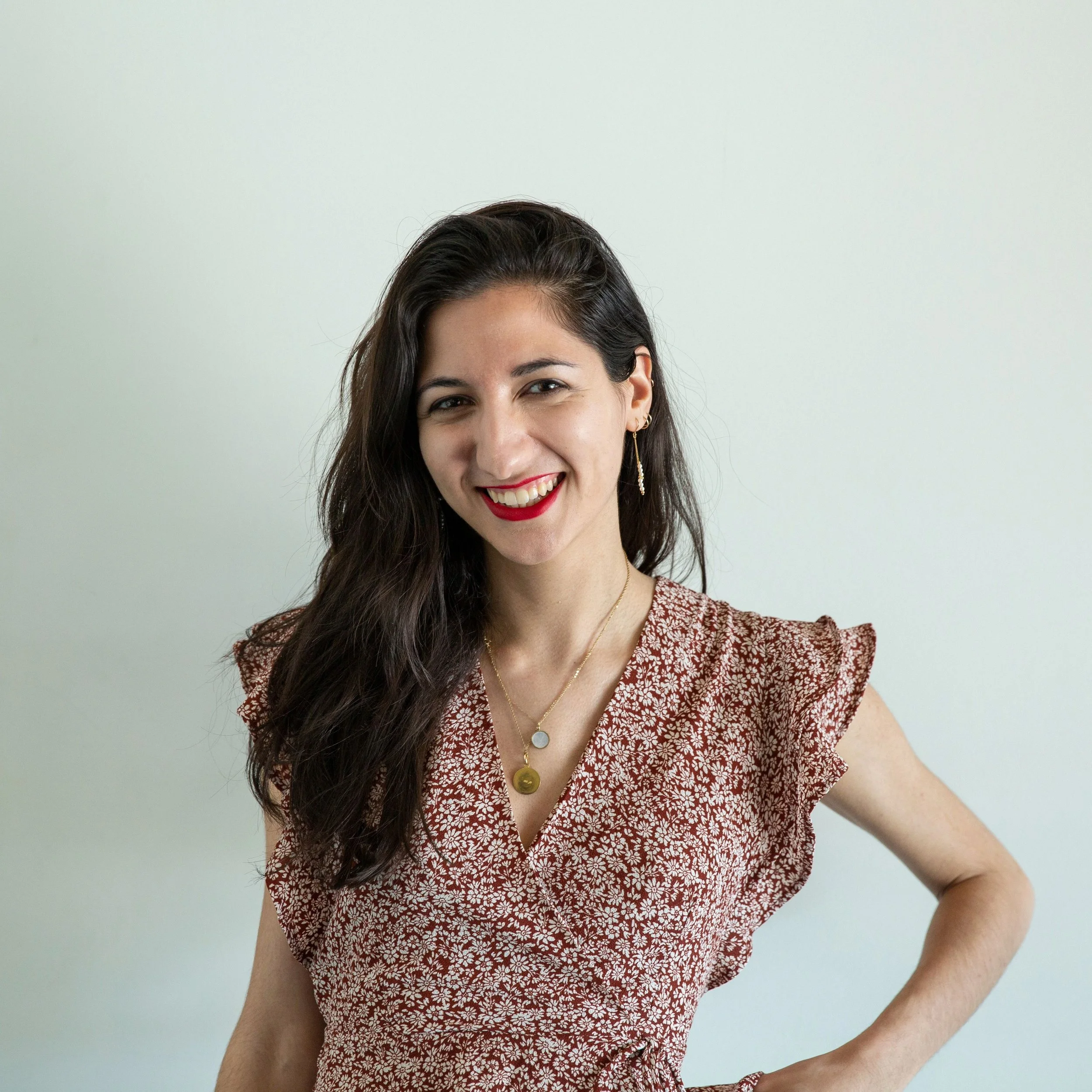
About the author | Mariam Vahradyan (C’24) is the co-founder of Kaitzak, a strengths-based organization dedicated to helping diaspora communities thrive. Her research and writing explore culture, collective narratives, and the ways stories foster meaning, identity, and connection, particularly within diasporic communities. Her writing on ritual, memory, and belonging has been published or is forthcoming in Psyche, SAVEUR, Pangyrus, and Greater Good Magazine. As the recipient of the 2023 Christopher Peterson Memorial Fellowship, Mariam is committed to making positive psychology more culturally responsive through storytelling and narrative practices. She has presented her work at UNIS-UN at the United Nations General Assembly, the International Positive Psychology Association, the Association for Psychological Science, and the Society for Personality and Social Psychology.