A Good Story
/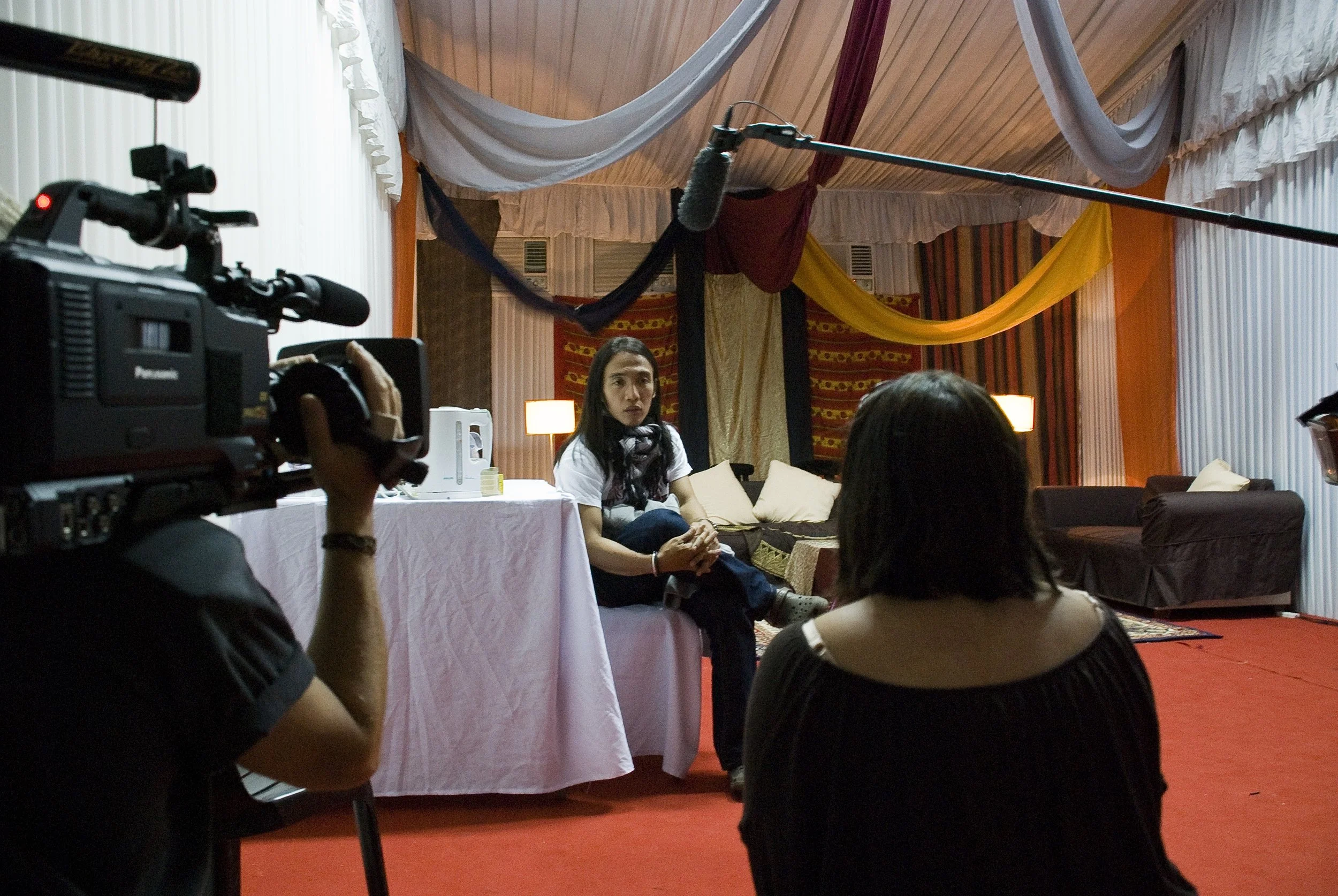
PHOTO by yul session; used with permission by capella fahoome
Jackie was born in Big Bear Valley and remained a permanent resident her entire life. She met her first love there; his name was Mr. B. Early in their relationship, a persistent younger suitor named Shadow charmed his way into Jackie’s heart. Jackie was reluctant at first, but soon she became defenseless against Shadow’s steady attention, thoughtful gifts, and clear desire to build a forever together. In 2018, they made it official, and their loving partnership created beautiful memories, several offspring, and an unbreakable bond; anyone could see they were in love. Through wind, heat, and snow, their community witnessed their commitment and perseverance, modeling a strength that could teach even the strongest couples a thing or two.
Sadly, Jackie unexpectedly passed away in August 2026. In the heartbroken tributes to Jackie, many wondered what Shadow would do and how he would behave—no, survive—without his Queen. But the world moves in mysterious ways, and the universe sent Shadow an unexpected soul. Not a normal tourist passing through Big Bear Valley, but perhaps a new permanent resident. Her name is Kaydee. The community observed with wonder: What is Shadow’s capacity to open himself up so soon after Jackie’s passing? Others were happy he had companionship because he was “such a good guy.” Everyone agreed that they wanted Shadow to remain in Big Bear Valley. Perhaps Kaydee is just what he needed to stay.
As you may already know, I am chronicling the Bald Eagles of Big Bear Valley. In 2015, the Friends of Big Bear Valley, an environmental educational nonprofit, installed a nest camera, turning everyday eagle life into internet reality royalty. It sparked debate, conversation, and a worldwide community of brand-new birdwatchers.
Recently, this 63 acres of land in Big Bear became the target of a luxury development, and Friends of Big Bear Valley and the San Bernardino Mountain Trust needed to raise $10.5 million to save the land and the single eagle nest that sits on it. Jackie and Shadow fans came together and raised almost $5 million through small community contributions. With only seven days left, OpenAI cofounder Greg Brockman and his wife, Anna, donated the remaining funds to save the land and the nest.
According to the U.S. Fish and Wildlife Service, there are roughly 71,400 nesting pairs of eagles in the United States (U.S. Fish and Wildlife Service, 2021), so why are so many invested in Jackie and Shadow… and… Kaydee?
The answer is simple and primitive. It is our widely used human superpower: Story.
What Makes Stories Special
As an independent documentary film producer, I have spent 20+ years pointing a camera and revealing the nuances of the human spirit. I have witnessed the magnificence of communities galvanizing around a well-told story. I’ve pointed a camera at a blended family in a remote fishing village on the coast of Cuba; at the first African-American Hot Air Balloon Master Pilot; at an amateur cinema club of elderly British filmmakers; at a recovering alcoholic singing on the streets of Manila, who became an American rockstar with the group Journey; and at a young, hopeful mayor whose idealistic plans to eliminate violent crime through community-based action, rather than the more popular strategy of over-policing. I have watched audiences come together, support people who do not look like them, and connect, turning compassion into action around people who, on the surface, seem to have nothing in common. But the truth is we do; we all have a story to tell.
Neuroeconomist Paul Zak’s research on storytelling and oxytocin may help us to understand what is going on here. He and collaborators discovered that a well-told story can release oxytocin and affect our beliefs, behaviors, and yes, even our generosity (Barraza & Zak, 2009). Zak (2013) suggests that a compelling story should do two things. First, it must capture and hold our attention. Second, it must “transport” us into the character's world.
The story of Jackie, Kaydee, and Shadow delivered both. It convinced audiences to come back day after day to check in on their new eagle friends. It transported viewers into a new world 145 feet in the air. I, along with many others, became deeply invested in these eagles because of their story, the community that this 24/7 nest camera built, and the opportunity to be immersed in this new world—captivated by the eggs’ vitality, what’s for dinner, nestorations, and the little fuzzy eaglets growing into adolescents.
The narrative arc is nothing special, just eagles doing eagle things. We can safely assume that those other 71,400 nesting couples are also doing similar eagle things, but somehow they’re not significant because they don’t have a camera pointed at them?
Well, it’s not that they’re unimportant because they don’t have a camera; it’s more that Jackie and Shadow (and Kaydee) are important because they do.
When Stories are Shared
This is not an eagle story, a master balloon-pilot story, or a rags-to-rockstar story. This is a story about story and how we all have one. It is about the power of learning someone else’s story and how story can move us toward empathy, connection, and action.
Jackie, Shadow, and Kaydee are birds, just like those in your backyard. Before Arnel Pineda became an American rock star, he was singing on the streets of Manila. In both acts of his life, he mattered, and his story mattered, with the camera and without.
In fact, every human (and every eagle couple) is significant not because their story is streamed around the world, but because they exist. They are a collection of moments, relationships, losses, choices, and experiences that become their story. We first must write the Me, understand the stories we carry as individuals, what shapes us, and the meaning we make of them.
But what is a story if not shared? When stories are shared, when opportunities to listen, relate, and perhaps rewrite arise, the Me becomes We. That story creates connection and sometimes can even lead to collective action.
So, when you see someone, anyone, whether they are polite or rude, houseless or a rock star, an eagle or a pigeon, remember that there is a story there. We may never know the whole story, and we don't need to. We only need to remember that another life in front of us is unfolding and is meaningful, significant, and filled with possibility.
Our stories help us understand who we are. Sharing them helps us understand others. Stories remind us that none of us is in this alone. So first, Write the Me. Then, Write the We. Because the stories we write, tell, and listen to become the lives we live.
References
Barraza, J. A., & Zak, P. J. (2009). Empathy toward strangers triggers oxytocin release and subsequent generosity. Annals of the New York Academy of Sciences, 1167(1), 182–189.
U.S. Fish and Wildlife Service. (2021). Bald eagle population size: 2020 update. https://www.fws.gov/project/eagle-population-status
Zak, P. (2013). How stories change the brain. Greater Good Magazine, 17(1), 1–4. https://greatergood.berkeley.edu/article/item/how_stories_change_brain
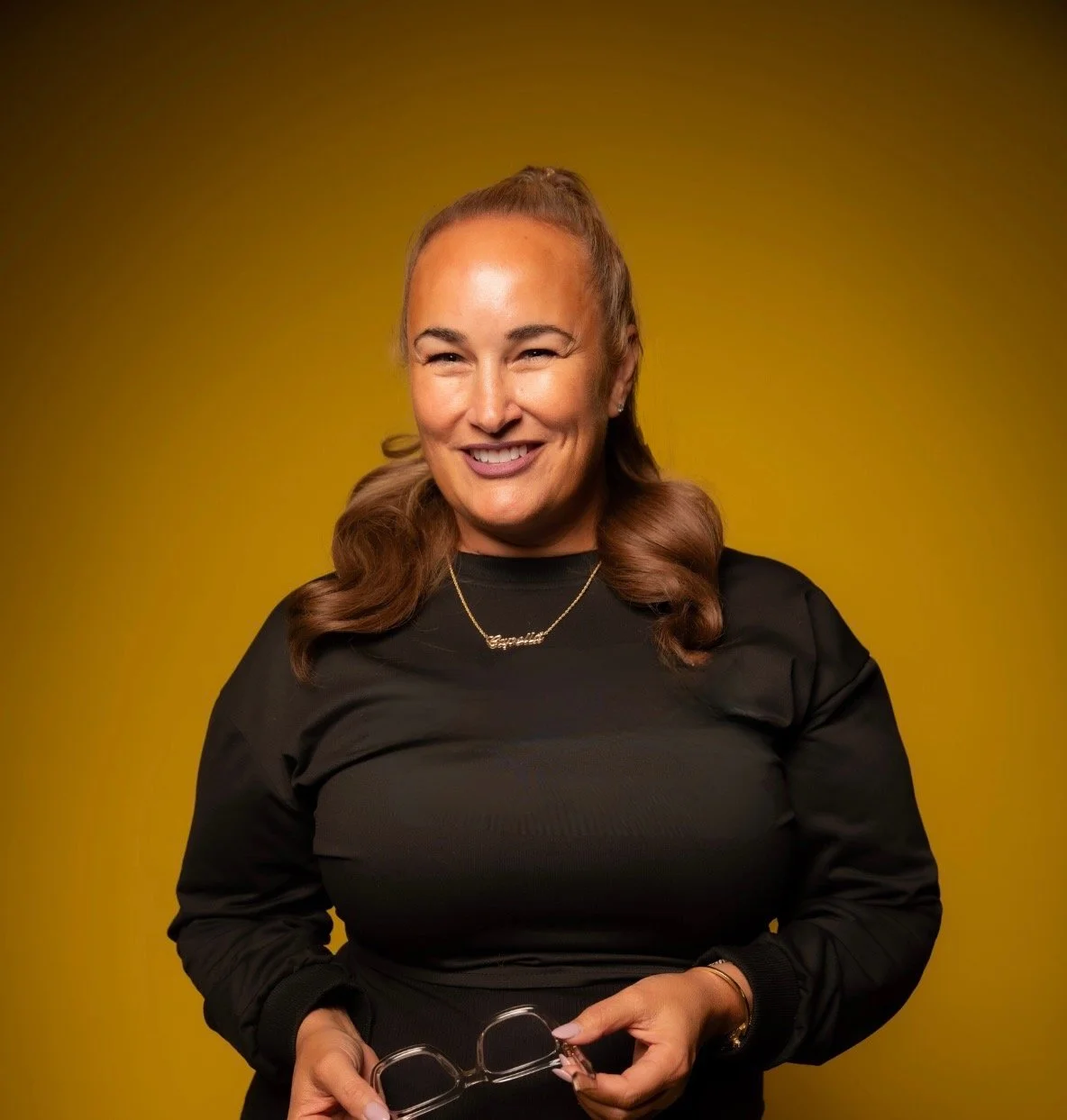
About the author | Capella Fahoome (C’22) is an award-winning film producer, organizational consultant, and facilitator whose work blends the art of storytelling and the science of happiness. Educated in Detroit Public Schools, she combines personal experience with academic knowledge, grounded in a deep respect for how context, culture, and human potential.
Capella holds a Bachelor of Arts in Psychology from the University of Michigan and two master's degrees from the University of Pennsylvania: a Master of Applied Positive Psychology and a Master of Philosophy in Organizational Dynamics. She also holds several certifications, including a Graduate Certificate in Leadership Development and Coaching from the University of Pennsylvania and a Professional Coach Certification (PCC) from the International Coaching Federation. She is currently pursuing a doctorate in Positive Organizational Psychology at Claremont Graduate University.
Capella also serves as an Assistant Instructor in Humanities and Human Flourishing at the University of Pennsylvania and hosts the positive leadership podcast 'When is Now,' which guides conversations on the art and science of modern leadership, meaning-making, and human connection.
Today, Capella transforms the science of happiness into an art-based practice, drawing on her 20 years as a film producer and her training in positive psychology and organizational behavior. Her work helps leaders, teams, and communities understand how stories shape perception, motivation, relationships, and culture, and how intentional storytelling can foster psychological safety, navigate conflict with empathy, deepen trust, ignite creativity, and create environments where people thrive.
Capella is the creator and facilitator of Working Title. This signature learning experience, delivered in as little as 90 minutes, has impacted thousands of participants and continues to expand across organizations and professional communities.
Capella has partnered with Page Two Publishing to release her first book, The Storyteller’s Guide to Leadership. Known for her energetic and authentic leadership style in teaching, coaching, and facilitation, she combines rigorous research with personal experience. She supports people in using story and being human.