How to Feel Loved: A conversation with Harry Reis, PhD
/
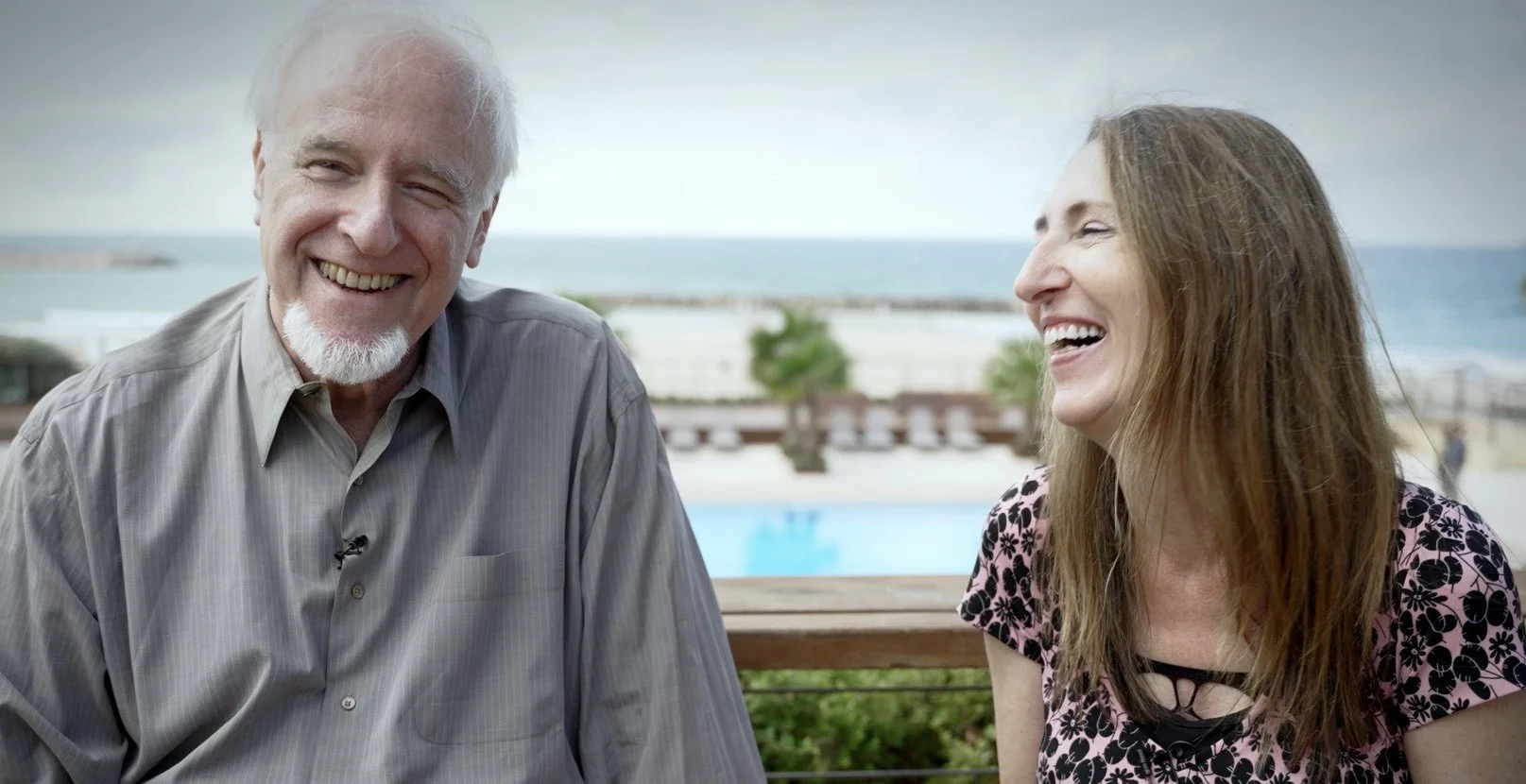
photo used with permission from harry t. Reis
This spring, we’re tackling a topic you’ve likely mentioned at least a few times already today, yet may struggle to define: Love.
What is love? And what’s its role in the good life? Alongside three MAPP alumni authors and two subject matter experts, we invite you to join us as we unpack the poetry and practice of choosing, sharing, and feeling love. In this issue, we explore the power of its presence, the impact of its absence, and the multitudes of its expressions. How love can light the way when we’ve lost ourselves. And how we can find ourselves—even when we’ve lost love.
To begin, we spoke with co-author of the recently released book, How to Feel Loved, relationship researcher and teacher, Harry Reis, PhD.
MAPP Magazine (MM): Please share a bit about yourself, your story, and its intersection with positive psychology.
Harry Reis (HR): Sure. My name is Harry Reis. I'm a professor at the University of Rochester, where I've been for 52 years. And I suppose I've been interested in relationships for all of my life, but it only became my professional interest a few years after I received my PhD.
I was always interested in positive psych. I would call it sort of a secondary or peripheral influence until somewhere in the 1980s. I was working with a graduate student named Shelly Gable at the time, who’s now a dean at the University of California, Santa Barbara. We realized that the entire relationship science literature was based on helping people overcome bad things. And that, of course, came out of the fact that most of that research followed marital therapy— helping couples deal with marital problems or perhaps mental health issues related to relationships.
There was a ton of work about how you get from bad to neutral. But we realized there was nothing about how you get from neutral to great. So, we embarked on a series of studies where we were trying to look at how relationships stay at the level of wonderfulness that people experience when they get together. Nobody ever got together with someone [hoping for] a neutral relationship. People get together with other people because they experience a sense of joy, exhilaration, passion—all these wonderful, very positive things that people experience in relationships. So that was our approach to relationships.
Then, roughly about seven years ago, I was talking to Sonja Lyubomirsky, who is, of course, the world's leading expert on happiness. I have this interest in relationships, and we came to what we thought was a stunning realization: Here were these two literatures that ought to be totally relevant to each other, but people in those fields were not talking to each other! So, we started talking to each other. We started talking about how happiness research—which indeed points to the importance of social connection and relationships, and how relationship science, which indeed talks about what can help people be happier with their relationships—how these principles could be meshed together. And that was what led to the conversation that produced our book, How to Feel Loved.
MM: Amazing. As we shared, this issue of MAPP Magazine is about love. As you see it, Harry, what is love?
HR: Well, as you have probably realized, love is one of the most ambiguous words in the English language. You can love chocolate ice cream. You can love the New York Giants. You can love your mother, your romantic partner, the class that you're teaching. . . You know, you can love a lot of things. And indeed, the love literature deals with this issue by addressing many kinds of love. In our view for this book, love refers to people for whom you have a warm, caring interest in, people whose welfare you are concerned with, and people who you feel are also concerned about your welfare.
We don’t think of it in terms of being in love or solely in terms of romantic passion, but rather the warm feelings of comfort, connection, and caring that you feel with somebody else. So, one of the things we take pains to do in our book is to talk about how love applies, not just to romantic relationships or family. It also includes the love you can feel for a coworker, for a teammate, and even sometimes for the barista who just gave you a big, warm smile as they served you coffee. Love is this caring feeling that you have for another human being.
MM: How is this kind of love different from other constructs, like connection, attachment, or intimacy?
HR: When people talk about connection, they basically mean anything that creates a bond with another person. You can have a bond with another person that isn't necessarily a loving or caring relationship. You might respect them as a human being, but you don't necessarily feel affection for them. For example, most of the students in my classes—I would say I don't really love them. Occasionally, there are students I do feel love for, but for most of them, I don't. At the same time, I feel responsible for them. I feel a connection with them. I feel that we have a bond that transcends the classroom. And when they come back and visit during alumni weekend 10 years later, I feel like it’s wonderful to see them again, and I feel grateful that they came to visit. That's a connection, but it's not necessarily a loving connection.
Attachment is a loving relationship, but it's a particular kind of loving relationship. It's a loving relationship in which you feel that the other person is your secure base. They are the person you can count on if there's ever a problem and you need assistance. You can go to that person because you know they will be there for you. So, I think attachment is a particularly strong kind of love. It’s a much more specific kind of relationship. When we talk about love in our book, we're definitely including attachment relationships as well.
MM: That makes sense. Thank you. So, in your book, How to Feel Loved, you suggest that being loved isn't necessarily the key to happiness, but feeling loved is. Can you share more about that? Why does feeling loved matter? And how can we distinguish between being loved and feeling loved?
HR: We're certainly not saying that being loved is not important. We wouldn't say something as foolish as that. But the problem that many people face is that you can be loved but not feel loved. Other people may feel as if they love you, but the problem is that you may not experience it. You may not be internalizing it. That can happen for a variety of reasons.
Being loved is certainly a step toward feeling loved, and in most circumstances, when another person is acting in a loving manner towards you, you will end up feeling loved. But we wanted to focus on feeling loved because we believe that to get the maximum benefits out of love, you actually have to experience what other people are communicating to you as loving. That requires the mindsets that we talk about in the book.
MM: Thank you. It's a really interesting distinction, and we’d love to talk more about those mindsets. But first, before this call, we were discussing how this sort of reminds us of the cycle of mattering—how feeling valued promotes adding value and how adding value promotes feeling valued (Prilleltensky, 2014; Rosenberg & McCullough, 1981). Is it the same with love? As you feel loved, are you more loving? And the more loving you are—do you tend to feel more loved?
HR: That's a great question. And the easiest way to answer it is to talk about an all too common circumstance in which people may be loved and yet not feel loved. That would be a circumstance in which I'm having a connection with you and you're expressing loving feelings toward me, but I'm not letting you see the real me. I'm putting on airs. I'm not telling you something important about myself. I'm not letting you see my shortcomings. And you're communicating something that says you think I'm a cool, interesting, wonderful kind of person. But I can't take that in because in the back of my mind, I'm saying, “Yeah, but if you knew the real me, you wouldn't be saying that.”
This can happen when a person keeps a deep, dark secret. There's an example that I find really compelling of a man who, on his deathbed, left a letter for his wife. In that letter, he said that when he was younger, he had murdered a few people. He had never let that on, and she was only to open the letter after he died. I assume she was expressing love for him and caring for him throughout their life together, but at the same time, he wasn't able to take that in because he had this secret. He [likely thought], “Yes, and if you knew this about me, you wouldn't feel that way.” But he felt the need to share that information, so he left this letter for her on his deathbed.
I think when we don't share ourselves, when we don't let other people know who we really are in all of our full multiplicity, we make it very hard to take in whatever positive feelings they may be expressing for us. This, in turn, makes it harder to really feel loved.
MM: That’s really moving. It took my breath away.
HR: Yeah, that one is a very compelling example. Most of us don't have deep secrets like that.
MM: Yes, but I do think this may be an extreme example of something that a lot of people might be experiencing—the belief that if you knew the true me, you wouldn't love me. What I hear you saying is that when we think we can’t disclose or share our true selves with other people, this keeps us from really experiencing love.
HR: Right, yeah. And there's wonderful research on secrets by Michael Slepian. Everybody keeps secrets. Sometimes they're little secrets, and sometimes they're big secrets. One of the most common examples I know is when people have affairs. The interesting thing we know about that is that when people have had affairs but they keep them secret, they think that they're keeping their loving relationship together by not telling the other person. But at the same time, every time they experience love from the other person, there's this little voice in the back of their head that says, “Yeah, but if you knew that I had had an affair, I bet you wouldn't feel that way toward me.” That makes it that much harder to feel loved.
MM: Yeah, and I would imagine it also compromises intimacy.
HR: Yes, it compromises intimacy because you've always got the guard up. But you know, the interesting thing about the research on affairs is that revealing an affair doesn't always lead to breakups. And in many cases, the act of revealing an affair can actually strengthen a relationship.
MM: That's deep. Thank you very much.
HR: Yeah, yeah.
MM: So earlier, you alluded to mindsets that can help us feel more loved. Can you share more about these mindsets?
HR: Yes, Sonja and I describe five mindsets, and they work in a cyclical way. The mindset I like to start with is the listening-to-learn mindset. The listening-to-learn mindset essentially builds off a simple observation that a number of scholars have made, that when we're listening to somebody else, we're often thinking, “What am I going to say next?” You know, “How am I going to turn this to a story about myself? How am I going to get out of this conversation? How am I going to respond?” We're not listening to learn. The listening-to-learn mindset says that if you want to build a loving connection with another person, if you want to start a conversation that will lead to feeling loved, you need to listen to the other person in a way that says, I really want to know what you're about. I really want to know more about you as a person, what you believe, what your experience was.
The simplest phrase you can use to do that is three words: “Tell me more.” Of course, you can say that in other ways as well. The idea is to communicate to the other person that you really are interested in them and in what they're saying. This sort of aligns with one of the other mindsets, what we call radical curiosity. When you communicate this interest to somebody else, something really amazing happens. The other person is kind of like, “Huh, you're really interested in this experience I had. Wow, okay.” People love to tell you about all this. And if you can communicate this in an authentic manner, it starts to build a connection and a real conversation, not simply an exchange of words. Those are the two mindsets that I think you can use to kick off the process.
What then happens if the conversation is unfolding in the way that we hope is that it motivates the other person to ask you similar questions. They become interested in you and what your experience is, and that encourages you to share. And so, it's this back and forth. Reciprocity is one of the strongest rules of human behavior that we have. In most cases, showing genuine interest in another person will kick off their interest in you, not necessarily in that moment, but over the course of a conversation, over the course of time.
If the other person doesn't reciprocate, that may be a sign that this isn't the right person. You're certainly not going to feel love from everybody that you talk to. And it's often a matter of choosing the right person and having the right conversation with that person. But when the conversation works well, showing genuine interest in another person will kick off the reciprocity that's so essential to feeling loved.
One of the other mindsets is the open-hearted mindset. This is the idea of approaching other people in a generous, kind manner and also being non-judgmental about them. So, when someone tells you about something they did, it’s not judging and being negative about it, but instead, viewing their behavior in the best possible light.
When someone does something undesirable, we are often critical of them instead of approaching them in a non-judgmental way. Maybe they were having a bad day. Maybe they misheard what the person said. Maybe they were trying to find a solution to a problem. The idea of the open-hearted mindset is to make the most generous possible attribution in any situation and to realize that good people often do things that are not necessarily the best behaviors.
MM: Any other practical suggestions about how we can love better?
HR: Well, one practical suggestion is an idea that came up when Sonja and I visited with the Dalai Lama in April of 2024. He talked about how he thinks about other people as he would think about his mother, particularly people he dislikes or is prone to dislike. It [helps him] think of them in the most positive light.
I think the listening-to-learn mindset is also applicable to your question. When we approach people who we don't necessarily have a favorable impression of, one of the things that we can think is, “I don't think I like you, but I'm going to give you the benefit of the doubt. I'm going to listen to you and encourage you to tell me about yourself. I’m going to listen to really learn why you think that.”
If you become authentically curious about another person, sometimes you find out that the thing you didn't like is in fact not true and that they're actually someone you can find a connection with. So often, we approach other people with our defensive barriers on. You know, “I'm not gonna let you do anything that would hurt me. What do I have to do to impress you? I'm not gonna do anything that you might possibly dislike. I'm not gonna connect with you.” But if we lower those barriers and approach the other person as, “Geez, this is someone I might like. This is someone I might have a connection with.” Not always, but often this can actually lead to a connection.
MM: I love this. And, it seems very vulnerable—risky even—to lower down barriers. I’m thinking about the person we spoke of earlier, someone who holds a belief that if you knew the true me, you wouldn't love me. What guidance can you offer to that person about taking the leap—about getting past the fear, about having the courage to risk showing up in an open-hearted way?
HR: You're absolutely right about that. Revealing undesirable things about yourself is indeed a risk. And it does indeed make you vulnerable. I like to think about it as if you don't reveal it, you're paying the price for it anyway. So, if you're paying the price anyway, why not take the risk? Sometimes the other person will say, “That's despicable, and I don't want to have anything to do with you.” Okay, so then you've lost the connection. Other times, and more often than not, it can lead to interest: “Why did you do that? What led you to do it? How do you feel about it?” It may actually lead to a deeper kind of connection. So, it's a question of whether you want to shut yourself off and make sure that all those disconnects will happen, or if you want to take the risk of opening up and possibly building a stronger kind of connection.
Now, let me be clear about one thing. Nobody's suggesting that in the first five minutes of talking to someone that you should dump all your traumas on them. No, that's not what we're saying at all. It's something that you build up slowly over time. You wait for the right moment. It might be in the seventh conversation. It might be in the 20th conversation. You build [trust] in a graduated sort of way.
There's an old metaphor in the relationship literature that getting to know another person is like a process of peeling an onion. And as you peel away each layer, you get closer to the core. So, it's something you've got to be strategic about as you get to know a person. But you can't just stay at the outer level of the onion. You've got to get all the way in over time.
MM: Thank you, Harry. Many of our readers are positive psychology practitioners. And of course, all of them are in relationships with other people. What would you like them to know?
HR: What I would like them to know is that many of the ways that people go about trying to create loving connections are in fact counterproductive. For example, many people think about mattering in a manner that can lead them in the wrong direction. For example, [some might think], “If I make myself more beautiful, others will love me more. If I accomplish more, other people will love me more. If I go to the gym and make my muscles big, other people will love me more.” That may be a way of impressing other people, but it's not a way of building a loving connection with other people.
A point that we try to make in our book is that it's not about changing yourself. It's not about making yourself more lovable. And it's not about getting another person to love you. Rather, it's about creating a conversation in which feelings of love can naturally emerge. It's not my properties and it's not your perceptions of me. It's the conversation that occurs between us that allows these feelings to emerge.
MM: Thank you for that. So, as we wind down, we want to check in with you. Is there anything more you’d like to share or anything we didn't ask you about that you wish we would have?
HR: Well, the question that many people ask me about is AI chatbots.
MM: Okay, that’s not where I thought we were going, but yes, please go for it!
HR: Chatbots are great at giving people the kind of feedback that makes them feel loved. This is not surprising. They've been trained on our literature, including all of the studies about how to communicate empathy, how to communicate warmth, and so on. So, it's not surprising that a well-designed chatbot would know exactly the right things to say.
When you look at anecdotal reports, there are also various studies that show people really like the feedback they get from chatbots. The problem is that at some point you're going to ask yourself, “Does this chatbot love me?” And the answer, of course, is no. The chatbot doesn't love anything. The chatbot doesn't have any feelings. The chatbot's not looking at you as a person. The chatbot is following an algorithm, and the algorithm is telling it to use the word love seven times.
Now, many people are hungry for love. We all know about the loneliness epidemic, which we think has a lot to do with this issue. Can chatbots be a short-term cure for feeling lonely? Absolutely. It's the same thing as if you were hungry and you picked up a candy bar. You wouldn't feel hungry for 10 minutes. But are you getting the nutrients you need to build a healthy body? No. And I would say the same thing about a chatbot. Are you building a healthy relationship? No, it's a one-sided relationship. The chatbot makes no demands of you.
I heard a report about a chatbot who talked about having a difficult day, which was intended to allow you to show empathy. Well, guess what? A chatbot can't have a difficult day; it's all made up. It's all nonsense. So, at some point you realize that.
One of the things that makes a loving connection so powerful is that you realize there's a person in there with choice who has chosen to express love to me. That's a powerful feeling. A chatbot that's been programmed to provide love can't do that. I believe that chatbots may be a good temporary solution to an immediate problem. But in terms of building a loving connection, they won't work.
MM: Maybe in some way we can learn from chatbots how to better respond to people.
HR: I think if someone used a chatbot as a teaching tool to learn how to be more empathic, that could be a very useful experience.
MM: Well, this has been a really engaging and interesting conversation, Harry. Thank you! How can readers learn more about your work?
HR: Well, our book has a website. It includes a diagnostic test that people can use to see where they are strong and where they might be stronger. The website also has links to Sonja's website and my website, which include various papers that we've published over the years. Howtofeelloved.com is probably the easiest way to find our work. And of course, they can also learn more about our work by reading our book.
MM: Excellent. Thank you.
References
Prilleltensky, I. (2014). Meaning-making, mattering, and thriving in community psychology: From co-optation to amelioration and transformation. Psychosocial Intervention, 23(2), 151–154. https://doi.org/10.1016/j.psi.2014.07.008
Rosenberg, M., & McCullough, B. C. (1981). Mattering: Inferred significance and mental health among adolescents. Research in Community & Mental Health, 2, 163–182.
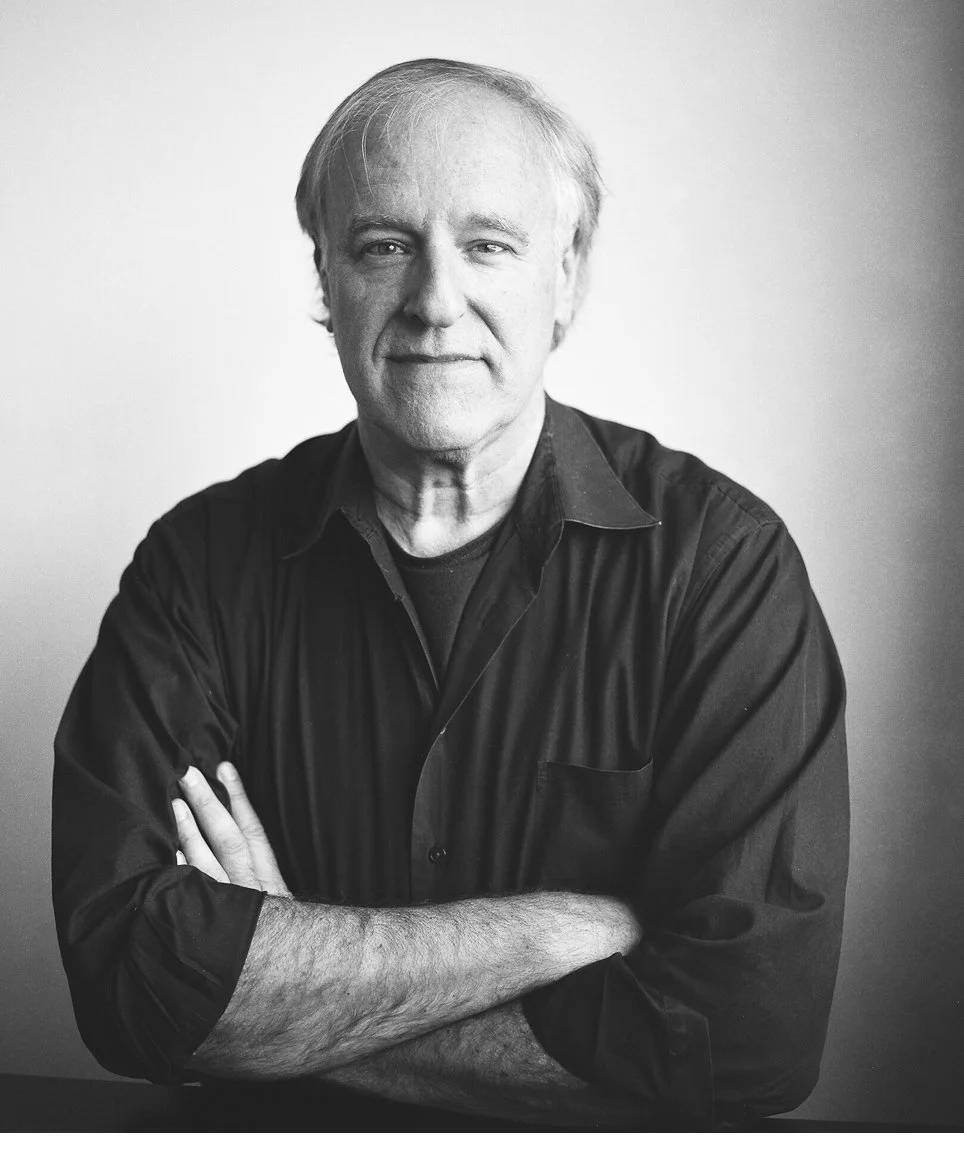
About the expert | Harry Reis is Professor of Psychology and Dean’s Professor at the University of Rochester. He received a B.S. in Psychology from the City College of New York (1970), and a Ph.D. from New York University (1975).
Reis, a leader in the field of social psychology, helped launch the field of relationship science. Noted for his contribution to theories of intimacy and responsiveness, he focuses on factors that influence social interaction and the consequences of different socializing patterns for health and psychological well-being. He investigates the psychological processes that affect the course and conduct of close relationships, with a particular interest in intimacy, attachment, and emotion regulation.
Reis has contributed more than 250 papers to scholarly literature. In the past, Reis served as president of the International Society for the Study of Personal Relationships, chair of the American Psychological Association’s Board of Scientific Affairs, and president of the Society for Personality and Social Psychology. He is a recipient of the Distinguished Career Award from the International Association for Relationship Research (2012) and from the Society for Personality and Social Psychology (2015), and was named to the Heritage Wall of Fame, Foundation for Personality and Social Psychology, in 2019. Reis received the University of Rochester’s Goergen Award for Distinguished Achievement and Artistry in Undergraduate Teaching (2009). He also received a Lifetime Achievement in Graduate Education Award in 2024. In 2013, he was named to Time Magazine’s “Who’s Hot on Campus” list.
Reis lives in Rochester, N.Y. with his wife, a clinical psychologist, and 2 cats, who are both delighted to participate in zoom talks.