Making Love Legible: A conversation with Jacqueline Mattis, PhD
/
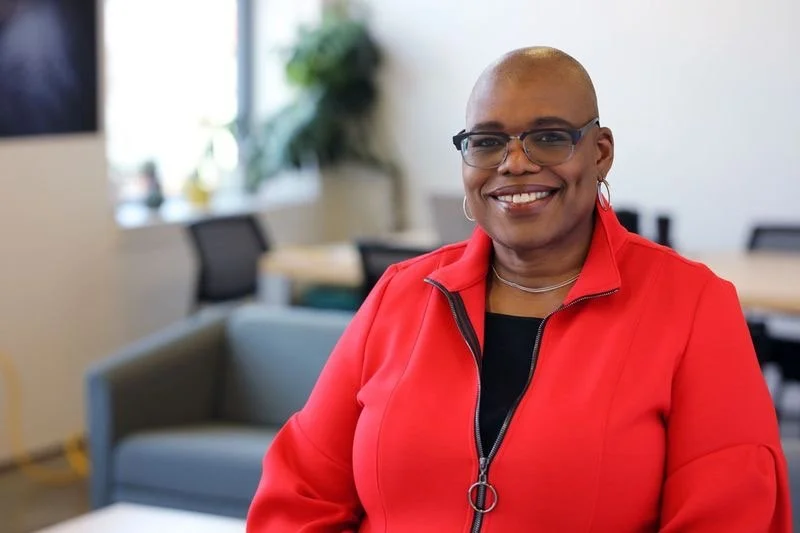
Photo used with permission from Jacqueline S. Mattis
As Zerish Mattis-Easton taught her daughter, love lives in the spaces we hold and the stories we tell. It lives in our labor and the hours between shifts. It lives in a pot of soup for a neighbor who needs it, in the questions we ask, and the grace that we give. Love is catalytic and transformative. It’s transcendent.
Anyone who has spent time with her can attest, Zerish’s daughter Jacqueline Mattis, PhD embodies both the expansiveness and everydayness of love. And in a field that has largely overlooked love in urban contexts, Jacquie Mattis is helping to make love legible. To close this issue on the science of love, we’re pleased to share our conversation.
MAPP Magazine (MM): Will you please tell us a bit about yourself and your work?
Jacqueline Mattis (JM): So, I am Jacquie Mattis. In my day job, I'm the Dean of the School of Arts and Sciences at Rutgers University, the Newark campus. I always stress the Newark campus because the campus itself is rooted in a commitment to social justice, which very few campuses are. That’s what brought me to Rutgers from University of Michigan, where I was before, and I loved being there.
I’m a psychologist by training. And I do this work trying to understand human goodness and human beauty, particularly among African American and Afro-Caribbean people. It's not part of the way that we think about and talk about and imagine Black and Brown folk. So, I'm particularly focused on that.
MM: Can you speak a bit more about how your work has intersected with positive psychology? How did you make that link?
JM: So, I was minding my business as a scholar. As a graduate student, I studied religion and spirituality and how what people believe in leads them to live better lives than they would under other circumstances. Initially for me, that was partly located in the area of how people navigate stressful contexts.
On some level, I was interested in understanding my family. I came from a family where people did these really loving things. But I wasn't seeing the richness and lovingness and just beauty of the people who made my life possible. I wasn't seeing them reflected in the research.
So, my entry into the world of positive psychology was through studying religion and spirituality as ideological systems. That led me to studying and talking about lovingness, compassion, and all of the other things that I now imagine love leads to under the best of circumstances. It doesn't always, but under the best of circumstances.
The other important thing is that I was at the University of Michigan, where Chris Peterson (a founder of the field) was a faculty member in the department. Chris was just a lovely human. I never took a class from him, but I'll tell you a story I don't think I've ever told publicly. People who know me know it’s true.
I had a circumstance where someone I did not know broke into my apartment and caused a lot of damage, both to himself and to my apartment. I had to go to court to do a victim statement, and two people came with me to the court proceedings: Rob Sellers and Chris Peterson.
Chris helped me clean up this bloody, messy, horribly disrupted apartment. He moved furniture and did all sorts of things. He just showed up in his big burgundy car and sat with me in one of the hardest moments at that point of my life. He showed up to court with me and literally held my hand through really difficult proceedings.
Chris always said, and people know him for this: “People matter, period.” And he lived it. I came to understand the lived experience of positive psychology through my relationship with Chris Peterson. Certainly through conceptual things [as well]. But positive psychology came alive for me in certain ways because I happened to have a direct connection to Chris as a living soul.
MM: What a beautiful introduction to the field. And I love that: understanding it through lived experience, not just through the concepts. That's incredible. As you know our spring issue is about love. So to begin, what is love, and what does it look like in practice?
JM: I think of love as a cognitive, behavioral, and emotional stance toward other people or other living things, that is marked by affection, care, and related constructs—like the desire to protect. A sense of commitment to the being that you love. A sense of passion or desire to make that person or being safe and happy. And the experience of just holding people dear. That's the definition that I use all the time.
What it looks like on the ground? When you genuinely love someone—if someone tries to hurt them, one of the first things you try to do is to protect them. Even people who are passive 23 hours a day. If you come for the people they love, they will take you out, right?
You can see both the positive proof of love through what people do spontaneously and also in how they show up every day. You can also see the lie when people say they love a person or animal, but then they hurt them.
You may have strong feelings towards this person, but love is a very specific kind of thing. For me, love is an emotional, cognitive, and behavioral enterprise. Sometimes there are contradictions among those things because love is not always mature. But there are some things that people do that are the antithesis of love. They may be strong feelings, but they’re not love.
MM: Thank you, Jacquie. So, in your own explorations and expressions of love, where do other constructs you’re well known for—like forgiveness, compassion, and justice—fit? Where are they situated as you consider love?
JM: I think there’s an interesting bidirectional relationship between love and some of the constructs that I study. When my dear sister-friend Wizdom Powell was a graduate student of mine, we started looking at forgiveness together—like manhood and forgiveness. She had a primary interest in forgiveness and led a number of studies on this.
Forgiveness is one of the constructs that I think is connected to love. It doesn't have to be, but it often is. In one way or another, we are not only going to transgress against other people, but people are going to transgress against us—deliberately or not deliberately. It's just the nature of being alive, right? When you love someone, it forces you to consider what forgiveness means and whether or not you will do the labor of forgiveness.
Love forces us to consider certain kinds of labor, and the labor of forgiveness is one of them. This doesn't mean that if you don't forgive someone, you did not love them. Because forgiveness is not a one-time enterprise. You forgive people in stages, and you forgive them again and again, in much the same way people forgive you. There are certain circumstances in which you can forgive someone and also decide that they cannot be a part of your life. In that case, forgiveness is a decision for your own survival as opposed to the desire to actively love someone.
I think love provides you with the impetus to do certain kinds of value-based and virtue-based labor. It allows you to understand forgiveness and to forgive in pieces. It also allows you to be forgiven in pieces.
I was saying to somebody the other day that it blows me away that we all start as a bundle of cells, and we end up with friendships. Like, how do you make that arc? You know what I mean? That’s magnificent! How can this bundle of cells become something that learns to laugh, to make decisions, to make the decision to have a friend? To give up your life for that friend—a bundle of cells! That's wild. It's absolutely wild. I think love is one of those things that does the labor of deciding, experiencing, and growing into other virtues.
MM: I feel like we could stop here and call it a day! Cells to friendship—I’m going to think about that a lot. In your work, you’ve shone a light on love, goodness, and transformation, specifically in the diaspora and urban contexts. What are some of the ways you've seen love show up in these contexts?
JM: I've seen people make extraordinary decisions about the sacrifices that they will make— mothers who will work two and three shifts and be bone tired and keep doing it because that is what it takes to take care of their kids. Whether their kids are biological kids or it’s their sister's kid or the person down the hall's kid. And when you've been in the presence of somebody who's truly exhausted and you see them still make the decision to take the shower, to get the clothes on, to get to that next job, because who they're working for matters that much. . . That kind of thing is particularly powerful to me, especially in urban areas. I think urbanicity comes into play here because so many urban areas are utterly unaffordable. In order to keep their family alive, so many people have to make those kinds of sacrifices.
I think about this a lot because my mom was a social worker working in a housing community where people struggled in a variety of ways. Boys got in the middle of fights to protect their siblings, to make sure that their moms and dads were going to be okay. Young men made hard decisions to sell drugs or to put themselves in danger.
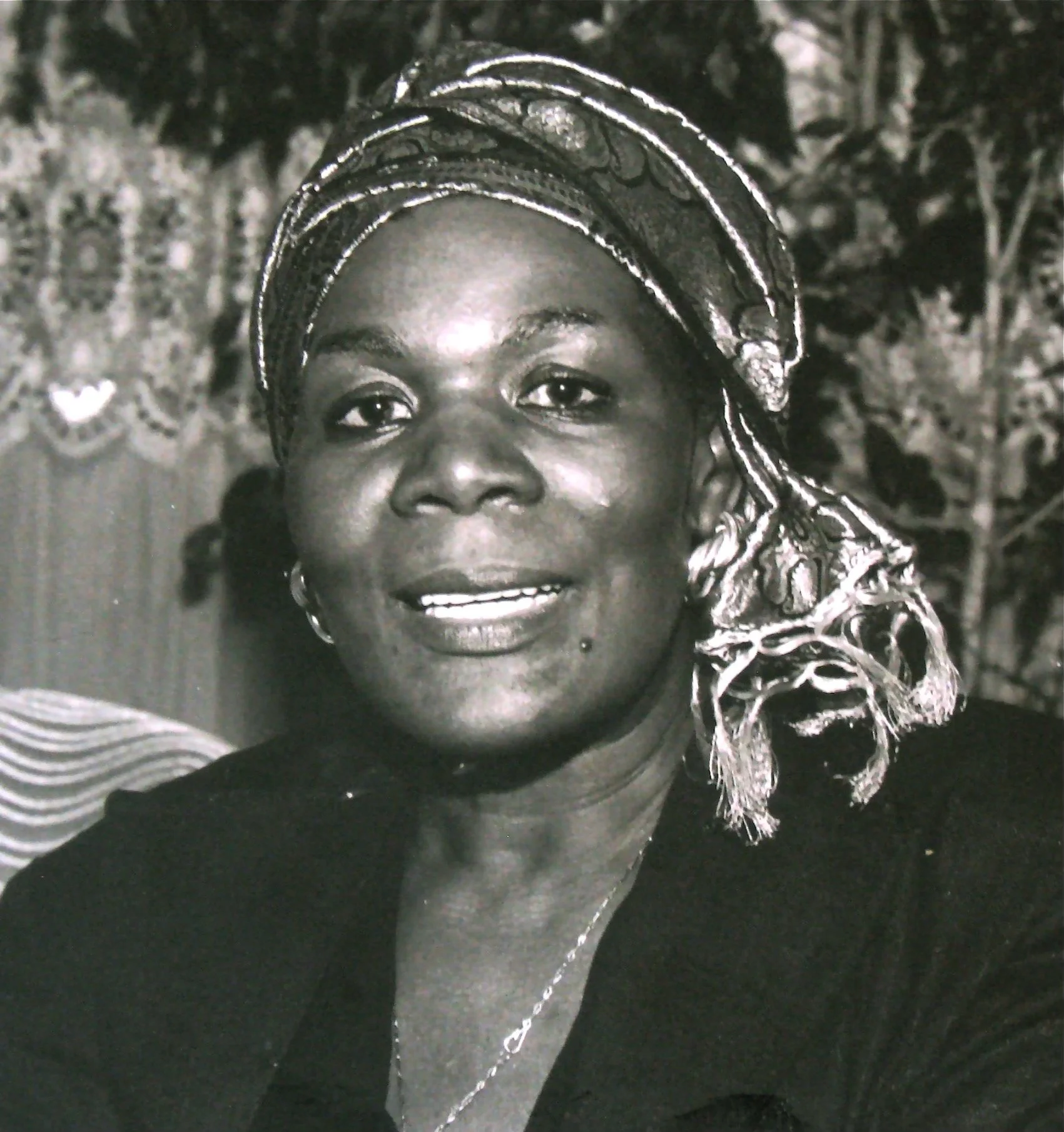
zerish Mattis-easton | Photo used with permission from Jacqueline S. MattiS
I grew up with this around my life. My mom worked two and three jobs consistently. She had a 7–3 shift, and then she would work the 3–11 shift. So, from 7 a.m. to 11 p.m., six or seven days a week, my mother worked. She would come home, sleep a little bit, and then she would make clothes for people to sell. Or she would sell Avon. She was constantly working, and she was not the only person in our lives who did that. We had aunties who did that. We had people in our lives who would show up with a $20 bill when my mom was basically on her face, ran out of money, and couldn’t pay the rent or whatever it might be. They would slip a $20 bill in my mom's hand, then sit and talk as if nothing had happened. But we would see it.
When I was six or seven years old, I watched my Auntie Faye do this. And my mom did it for her, too. My mom would show up with a $20 bill or with a pot of some food. “Baby, I don't have any money, but here's some food for you and the kids.” If you watch this happening over and over again, you see what love looks like on the ground.
The year I lived in Chicago and I was doing clinical work there, I encountered young people, particularly young boys and young men, who were profoundly loving. But that's not the image that people had of them. They might think, “Well, this is just a drug dealer.” But do you know why he’s dealing?
There’s one young man I talk about all the time. He asked me, “Do you believe in hell?” And I said, “I don't know if I do or don't, but tell me why you're asking.” His response was, “If there's a hell, I believe I'm going there.” His sister was like seven years old, and he loved that girl so much. His decision was if what it takes to keep her safe is me going to hell, no question.
When you talk with a young person like that—when you just sit and have a conversation with him, you're like, “My God, do you know how much it would take to teach somebody to love like that?” That's the conversation that we would have in therapy. I said to him, “Let me be clear: If I had a son—which I do not—I would want him to be you.” This surprised him. But you can't teach that kind of love. You just can't.
That's what love does. That's what passion and commitment look like. You see that in urban spaces where the stressors that people have to confront are so profound and so existential that the decisions themselves are profound and existential.
MM: That’s stunning, Jacquie. Thank you. One of my favorite things that I've heard you say is, “Our power lies in the stories we choose to tell (or not tell) and the care we take to tell those stories responsibly.” In my own life, I've witnessed how storytelling and story retelling can be powerful expressions of love. Can you comment on this?
JM: When I was a graduate student in a clinical psych program, we were trained in a psychodynamic, psychoanalytic program, and it didn't resonate for me. I understood the theory. I think the theory is beautiful, but in terms of me being able to work effectively with people, it was not the thing. Then, someone introduced me to narrative constructivist therapy.
I grew up in a storytelling culture and a storytelling household where a lot of things go back to my mom and my grandma. My mom would always remind us that everybody's got a story, and everybody's behavior is a reflection of their story. So, don't judge, right?
My mom taught GED classes because it was what her clients needed. There were times when I was sitting in her class when someone would show up really, really late. Other people might see that as disrespectful and chide the person. But my mom would always wait until a person sat down. She would make her way to where they were sitting. She’d touch her hand to their back, lean over their desk and ask, “Are you OK? You good?”
She would never ask, “Why are you late?” Never. So, at some point, I asked her, “Why do you do that?” She said, people know what time class starts. They're not confused. So, if somebody shows up 15, 20, 30 minutes late—you don't know what bus was late. You don't know which baby was crying. You don't know whose mom needed extra care. You don't know what is happening in their life that led to 20 or 30 minutes. And if the thing that happened to them is something that they will talk with me about or we can help with, then that is the important thing. The time is not, right?
You can catch up on whatever they missed but you can't catch up on the humiliation you cause by making time more important than the baby who was sad or the kid who didn't get their homework done. You can't make up for humiliating people.
Everybody's got a story. So, be someone who holds people's stories well.
In the social sciences, we continue to tell stories that are often trite. They’re off and don't necessarily lead us to a truly deep and humane understanding of other people, especially people who are marginalized.
For example, we study sex among LGBTQ people, but we don't study love. Why? Who cares what your body parts are or where they go? What matters is that you’re able to show up in the fullness of yourself and somebody holds you. Whether you are queer identified or trans or whatever, what defines you is what care and compassion and love you are seeking, where you can get it, and whether or not you're allowed to hold it and have it in its fullness.
Fundamentally, we need to be able to tell that story—about the expansiveness of love. Not what somebody's wearing and the fact that their gender doesn't match their clothes. That junk is stupid. Tell the story of what they're wanting to hold—of what they’re capable of holding.
MM: Yes, absolutely. Right now, I am just thinking about why I came to MAPP. It was to better understand and care for people's stories. I'm coming back around to that as you're saying this, and I feel even more motivated to try to do that more as well. Thank you for that.
JM: We need it.
MM: Yes. Who are some of the other storytellers or scholars exploring love and transformative engagement who have moved and inspired you?
JM: They aren’t researchers. In the social sciences, we continue to write in a way that doesn't feel naked or connected to me. I think the authors who I love are the people who have been most profound in the way that they articulate love.
Toni Morrison is one of the people whose work I absolutely adore because she gets into the nuances of the everydayness of love—the sacrifices that one makes.
Beloved is one of my favorite books on the planet. It’s about that audacious kind of love that says, I am in this horrific condition called enslavement, and I have given birth, and these people are going to separate me from my child. They can sell off my children. They can sexually assault my children. They can brand them and beat them, and I'm simply not going to let them live through that. It says I would rather take their lives and suffer the consequences than to have that. I love them that much. Where in the social sciences would you see that? It's not that we couldn't do that kind of work; it's just that we do not do that kind of work.
So, you know, Toni Morrison, Zora Neale Hurston, James Baldwin—these writers have really grappled with not only the experience of love in our everyday lives, but they've also dusted off the language of love in ways that are really powerful.
There are visual artists like Kehinde Wiley, who did one of the official portraits of President Obama. If you ever have a chance to look at his work—Kehinde Wiley loves Black people. And you see it in the way that he handles bodies and skin. He is intent on representing the beauty and majesty of Black and Brown, primarily Black men and women. Seeing his paintings was the first time that I realized that you could actually fall in love with people by painting them.
Another person is a quilter, Bisa Butler. She reflects the beauty and power of Black people and Black experiences through the work that she does. There's a way in which she deals with the beauty and the everydayness of Black men and women and our bodies and what we're thinking. It comes through in the way that she quilts. It's powerful. It's colorful. It's joyful. It's happy, and you can see your everyday life in what she's doing.
The care, the intentionality—these are people who look at you. There’s something about love that looks at you. It holds your attention.
MM: These are really beautiful, Jacquie. Thank you for sharing. So, many of our readers are positive psychology practitioners across a multitude of contexts. You have the floor. What would you like them to know about the science of love and how we can practice it better?
JM: I think one of the things that is important in the practice of love is getting people to do what you all started by doing: Talking about what love means for them. Because there is an existing definition of love, and then there is what love means for them given the journey that they have taken and the journey they want to take.
Getting people to articulate what love means in as detailed a way as we can is really important. It's important to recognize that there's a lot of what love means that will elude language. And most of us don't get to talk about love that much, right? We don't get to talk about much of our lives that much. So, the richness of our vocabulary may not be there. But in order to get people to language love as it shows up for them, we’ve got to be creative.
Sometimes it’s asking people to sing the song of love. It’s using the full spectrum of the cultural products that are available in people's lives. Aretha Franklin may say it better than you do. Or Kendrick Lamar, because it's their business to do that part of the craft of talking about love. And the reason you like what they have done and you sing what they have sung is because you appreciate that work and it matters to you in your life, right?
It’s helping people who are struggling with feeling loved to pay attention to the evidence in their lives that they have been loved well—even when they have not been loved well. I think this is partly my mom reminding me that everybody's got a story. That’s one of the things about narrative constructivist therapy: It’s recognizing that we all have stories, but we don't always tell ourselves the fullness of our stories. Some pieces of our story we borrow from other people, even when those are not true. And some pieces are missing because no one has pointed us to them.
To be specific, someone who says I am unlovable has to be missing places where they have been loved well. So, get them to walk back through their own experience and think about, even if it's for a moment, who loved you well, and what did that look like? And if you believe that you have not been loved because you are unlovable, even the presence of one gives lie to the idea that you are not lovable, right?
So, the teacher who pulled you aside and said, “I expect better of you.” Or the auntie who's like, “Baby, don't do that. You're bigger than that.” Or “Don't let them treat you that way,” or “You don't need to be in that relationship.” These are the pieces that you need to put into the story in order to get the fullness of who you are and what you are living. You've got to do that with people in order for them to see the fullness of either the love they are giving, or [the love] they’ve received or are yearning for. You've got to be able to help people to see both what is present and what is missing. What they’ve interpreted one way and how else they might think about that.
We have to become critical engagers with love if we want to live love fully. It's amazing how we throw around the word like we all do. But love is one of the things that we do that actually defines us as human. It's that powerful. So, not to spend the time deeply in it with our vocabulary and our attention—that tells us something about how much of our humanity we are throwing away.
MM: Wow, yes. Is there anything more you'd like to share or anything you would have liked us to ask about?
JM: I think the only other thing that I think about, especially in terms of love, is the importance of not using it as a cudgel. Not using love to hurt, punish, or chide people.
We must be really clear about the myths we have embraced about love. Like, if you love someone, you must forgive them. That's not true. But what leads us to think that? Like, love means that anybody can be a part of your life forever, no matter what they do. We’ve got to unpack where that comes from.
Some people, for example, think about physical, corporal punishment as a cultural practice. And parents who genuinely love their children and are in a cultural space where that is a form of discipline, but they are not intending to hurt you, right? The use of physical harm to punish, control, and hurt, especially in romantic relationships—these are places we’ve got to unpack individually, as families, and as communities—because love doesn't harm, right? How do we begin to unpack that?
If you can replace these practices, if you give people other options or alternatives—if people hold on to the practice, even when they have other alternatives, then you’ve got to raise questions. Are we looking at deep and profound passion, but not love? My mom used to talk about the difference between intensity and love. Deep intensity is not love. Love is reciprocal. We've got to be really intentional about unpacking the myths that we hold about love.
MM: Thank you so much, Jacquie. How can our readers find out more about your work?
JM: There are certain things I’ve written—about altruism and those kinds of things. But at this point, I have a different vision for how to make work accessible and how to engage people in the work.
I think I'm reimagining the ways that I communicate the content of scholarship. And when I am no longer in this role, I don't think I'm going to go back to doing traditional social science research and writing. [Rather] podcasts, conversation hours, and other kinds of things that allow for exchange. Because learning is fundamentally a relational enterprise. I'm interested more in the relationship. So yeah, I would point them to podcasts I’ve done, like The 10% Happier podcast. Or the talk on love. We did 52 interviews—it’s a small slice of three interviews.
To honor the lives of the people who talked with me, I’ve got to get those conversations out there. Because people are freaking beautiful, man. Teenagers, folks who are unhoused, folks who are housed. . . When you get down to it, love is the thing that binds us together. No matter where people are from, we're all struggling with the same thing. But again, we’re all freaking awesome. So, you know, that might be the title of the book: We're all freaking awesome.
MM: Sounds perfect. Thank you, Jacquie.
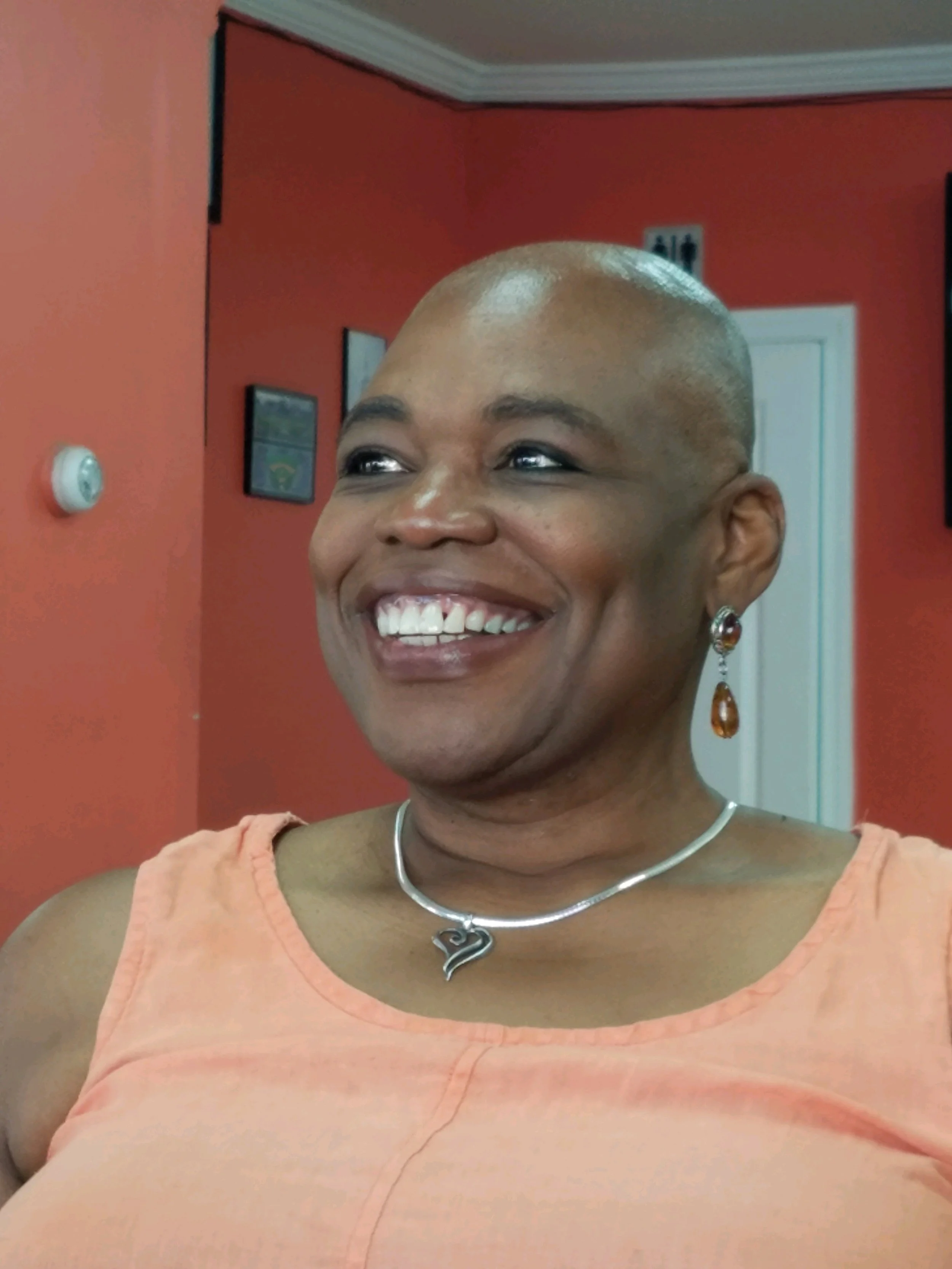
About the expert | Jacqueline S. Mattis, Ph.D. is Dean of the School of Arts and Sciences at Rutgers University-Newark. She earned her B.A. in psychology from New York University, and her Ph.D. in Clinical Psychology from the University of Michigan. Her research focuses on the role of religion and spirituality in the lives of African American and Afri-Caribbean youth and adults, and on the factors that are associated with positive psychological and psychosocial development of urban-residing African Americans and AfriCaribbeans. In particular, she uses quantitative and qualitative methods to explore the factors that contribute to volunteerism, civic engagement, altruism, compassion, empathy, forgiveness, optimism, and positive parenting among urban-residing African American and Afri-diasporic people. She has co-authored numerous articles and has served on the editorial boards of numerous journals. She co-authored (with collaborator Fulya Kurter) two books on counseling in the Turkish cultural context, including a handbook entitled “Culturally sensitive counseling from the perspective of Turkish practitioners” (Bahcesehir University Press). This handbook explores the topic of culture, cultural diversity and intercultural dynamics within Turkey as these issues apply to the practice of counseling. Among the honors she has received over her career are the Distinguished Psychologist Award from the Association of Black Psychologists (2014); and NYU’s Martin Luther King Jr. Award (2011) for teaching excellence, leadership, social justice and community building. She has been recognized for her mentorship and teaching. She received the 2020 Paul M. Fitts Graduate Mentor Award from the University of Michigan Graduate Leadership Council) for outstanding mentorship of graduate students in Psychology, and the 2020 Cornerstone Award for unique contributions to enhancing the academic and social progress of African American students at the University of Michigan. She also received the Outstanding Mentor Award from the University of Michigan’s Undergraduate Research Opportunities program (2019). She also is a proud member of the Board of Trustees of Clara Maass Medical Center in Newark, NJ.