An Inclusive Journey to Happiness -- And Understanding -- Through Film

An Inclusive Journey to Happiness -- And Understanding -- Through Film

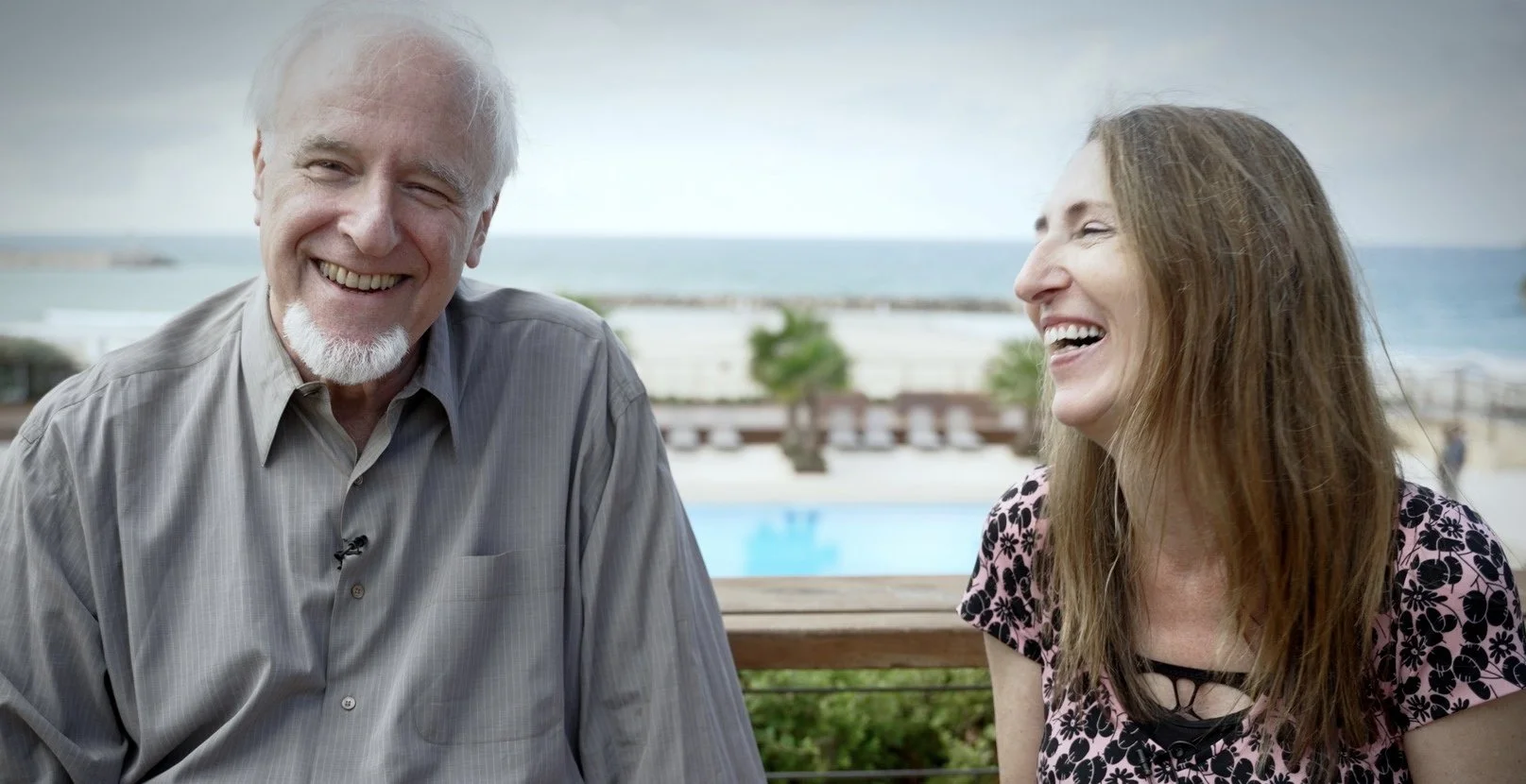
In 2019, we organised the world’s first Happiness Film Festival (which MAPP Magazine covered here). It was completely sold out, with close to 1,500 participants over a three-day period. As we were gearing up for the next edition of the film festival, we had a long thought about what themes we should focus on for the next festival.

Happiness Initiative is a social enterprise that focuses on promoting the science of happiness and well-being in Singapore. We have always believed that the work we do has to be accessible and inclusive. We cannot talk about building a happier society, but yet restrict access to an exclusive group of people that can afford the resources for it.

Read More

Bach and the Fine Art of Job Crafting

Bach and the Fine Art of Job Crafting

In 1722, the committee seeking a new Music Director for the St. Thomas Church in Leipzig, Germany, was in a quandary. This renowned position had been established in 1518, and, having been vacant for six months, it was crucial to fill it as soon as possible. At least three “top” choices had all turned the job down. The committee reluctantly agreed to hire their last choice, considered by some on the committee to be “a mediocrity.” His name? Johann Sebastian Bach.

Although reluctant, Bach took the position, but he also continually sought other employment opportunities until his “advanced years” prevented him from leaving his position at Leipzig, and he remained there as Music Director for over 30 years, to the end of his life. What does one do when stuck in a less-than-satisfactory job for over 30 years? One job crafts! Job crafting is a relatively new term used to describe workplace innovations that have actually been occurring for centuries, and possibly since the eons of time.

Read More

Out With the Old, In With the New: Use the Science of Habits to Make Your Goals Stick This Time!

Out With the Old, In With the New: Use the Science of Habits to Make Your Goals Stick This Time!

We tend to blame ourselves when we are unsuccessful at changing our behavior, whether it is instilling a good habit, such as introducing more physical activity into our day, or breaking an unproductive habit, such as overeating or drinking too much alcohol. We berate ourselves for not having enough willpower or self-control, we beat ourselves up over how weak or uncommitted we are, we end up feeling bad about ourselves and, sooner or later, we revert to our old behaviors.

Sound familiar? Well, stop it! Instead of playing the blame game, says social psychologist Wendy Wood, Provost Professor of Psychology and Business at the University of Southern California, learn how habits work, and apply those research-based principles to form habits that enrich your life, rather than detract from it. Wood, author of Good Habits, Bad Habits: The Science of Making Positive Changes that Stick, presented research on habits at the annual University of Pennsylvania Master of Applied Positive Psychology (MAPP) alumni Summit the weekend of October 23-24, 2021.

Read More

On the Science of the Arts and the Humanities: An Interview with Dr. James Pawelski

On the Science of the Arts and the Humanities: An Interview with Dr. James Pawelski

The latest issue of MAPP magazine focused on the topic of the Positive Humanities. After publishing it, we received a great deal of positive feedback. To learn more about the latest happenings in the field of the Positive Humanities, I interviewed Dr. James Pawelski, the director of the Humanities and Human Flourishing Lab at the University of Pennsylvania (UPenn) and founding director of UPenn’s Master of Applied Positive Psychology (MAPP) Program.

Read More

Applying Positive Psychology to Race Work

Applying Positive Psychology to Race Work

“If we are basically all the same, isn’t our work done?” That was the question a senior leader at a U.S. wealth management firm (we’ll call her Joan) asked us. Joan had offered to read an early draft of our book, The Business of Race*, and provide constructive feedback before we hit the send button to our publisher. Her question stopped us in our tracks, particularly when she added, “Serious question, not snarky.”

Read More

A Case for Lyrics and How They Impact Our Emotions

A Case for Lyrics and How They Impact Our Emotions

On August 28th, 2015, a few months before graduating with my Master of Applied Positive Psychology (MAPP) degree from the University of Pennsylvania, I walked into the office of James Pennebaker, a leading researcher in language and emotional experiences. I was excited and ready to talk about how words matter. Specifically, how lyrics, the words in a song, matter. I couldn’t wait for the conversation about his favorite lyrics, how artists could influence the world, and for all of the resources he could share that would support this hypothesis and set me up to start writing my capstone. I knew this was going to be good!

Read More

The Creativity Circuit

The Creativity Circuit

Creativity is prized by many, and involves an individual generating ideas that are novel, surprising and compelling. Well-being, also sought by many, can be viewed through a PERMA lens, whose components, according to Martin Seligman, include Positive Emotions, Engagement, Relationships, Meaning, and Accomplishments, abbreviated as “PERMA.” Positive connections to creativity have been shown on multiple dimensions of psychological well-being. Together, creativity and well-being can interact together to create a kind of “creativity circuit” that we can use to improve both our personal and professional lives. This creativity circuit can work in an individual or small group setting, and even on a larger, societal scale. The literature on creativity and positive psychology can show us how these two concepts interconnect and interact in a positive way.

Read More

Positive Humanities, Revelations and Love

Positive Humanities, Revelations and Love

When writing the compendium Character Strengths and Virtues, Professors Christopher Peterson and Martin Seligman turned to the Humanities to seek the universal traits that humanity considers the universal keys for flourishing. Cross-cultural strength-spotting in art, literature, religion, and history led to the discovery of the 24 strengths and virtues that became the basis of the empirical VIA Strengths survey, turning towards the humanities to identify the very virtues we often look for in ourselves. Is it surprising, then, that our discipline is sending us back out to the humanities to look for interventions to help us flourish? I think not. In my opinion, the new field of Positive Humanities is closing a circle.

Read More

Making It Up as We Go: Approaching Life Like an Improviser

Making It Up as We Go: Approaching Life Like an Improviser

We are all improvising all of the time. Improvisers do it on a stage for laughs and applause, while the rest of us are constantly making it up as we go (and almost never getting standing ovations for our efforts). In order to improvise games, scenes, even a two-act Shakespearean play or a full Broadway-style musical, theatrical improvisers cultivate a willingness to take risks, a well-developed sense of play, and major trust in oneself and one’s teammates. Improvisation requires performers to be exquisitely present as both active listeners and bold move-makers. It also requires a whole lot of resilience when things inevitably go “wrong.” As opposed to many games humans play, the goal in improvisational games is not to win, but to collaborate with others honestly, productively, and joyfully. We’re all just making it up as we go. Improvisers, however, are experts at making it fun as they go, and they reap well-being benefits as a result. I believe anyone can benefit from applying the philosophies of improvisation to daily life. So what are some of the “rules” of good improv and how might you apply them?

Read More

IPPA Evidence in Action: Spirituality in Higher Education

IPPA Evidence in Action: Spirituality in Higher Education

It was a profound honor to be asked to present at the International Positive Psychology Association (IPPA) Evidence in Action conference. This first-ever conference, with a theme of “Celebrating the Application of Positive Psychology,” took place virtually from March 18-19, 2021. The Conference featured over 30 hours of discussions and presentations from expert speakers and panelists representing IPPA’s six divisions. Presenters shared research as well as ideas and practical approaches that allowed participants from more than 30 countries to learn how to put the research into action.

Read More

Letter from the Editor: What Is the Future of Happiness?

Letter from the Editor: What Is the Future of Happiness?

With a year into the pandemic, it’s timely to reflect on how our experience of Covid-19 has changed us on a personal level. With our worlds narrowed down to the size of our apartments, we also needed to shift our coping strategies. We were no longer able to use the coping mechanisms that we regularly used in the pre-pandemic world to deal with the stressful situations that we faced in the lockdown world.

Read More

The Pursuit of Other Peoples’ Perspective...Matters

The Pursuit of Other Peoples’ Perspective...Matters

Chris Peterson’s legacy that “other people matter” was the foundation upon which Angela began her vivacious and endearing chat. She began with a few comments about how 2020 had taught her that “other people matter” through the perspective of empathy and truly recognizing the other perspective. While navigating the next months (maybe years) of our collective COVID normal of Zoom meetings, scarcely packed street corners, and less social time than we may desire with family and friends, Angela offered us a unique opportunity. We can hone critical skills of connection, empathy, and inclusivity by strengthening our ability to acknowledge and appreciate that other people have a perspective all their own, and that perspective matters.

Read More

MAPP.15 Capstone Montage

MAPP.15 Capstone Montage

For students in the University of Pennsylvania Master of Applied Positive Psychology (MAPP) program, the MAPP capstone is the project or thesis that symbolizes the peak of accomplishment within the program. The capstone also reveals the array of unique passions that compelled each student to explore and research a new nook and cranny of the field of positive psychology. For many members of the MAPP Class of 2020, the capstone experience was a positive MAPP rite of passage. For some, their capstone represented their life’s work. For a vast majority, the experience was highly valuable (most are using their research — or plan to — in an applied way that will make the father of positive psychology and MAPP Professor Marty Seligman proud), and for others the capstone journey and destination bordered on life-changing.

Read More

Letter from the Editor: A Moment to Reflect and to Welcome Our New Editorial Team

Letter from the Editor: A Moment to Reflect and to Welcome Our New Editorial Team

As I pass the baton of MAPP Magazine Editor into the capable hands of Dr. Irem Gunay (C’12), I am reflecting on the enormity of what has transpired in our world during my one-year tenure. We have collectively experienced events which were to me unfathomable at this time last year: a global pandemic, a breaking point reached through tragedy after tragedy in the centuries-long American story of racial and social injustice, and a political firestorm that has shaken the very foundations of our democracy. For most of us, even as we watched these unimaginable events unfold from the relative comfort of our homes, our personal lives have been dramatically altered by the pandemic, bringing fundamental changes to the way we work, parent and relate to our loved ones and community. The year has been nothing short of life-changing for us all.

Read More

Lost and Found: Reconnecting with Your Strengths

Lost and Found: Reconnecting with Your Strengths

My curiosity sparked multiple questions about my strengths. How do I express my unique strengths and how do others receive them? How might I nourish each of my five signature strengths? Does each strength need its own ‘nutrition’ plan? How do my strengths interact and support each other? I was also curious about others’ signature strengths. How do other people experience their top strengths? How do others express perspective, spirituality, humor, and other strengths that were not as familiar to me?

Read More

Be Your Own Inner Ally: Harness the Power of Self-Compassion

Be Your Own Inner Ally: Harness the Power of Self-Compassion

Which trait is more likely to increase your well-being: high self-esteem or a high level of self-compassion?

According to Kristin Neff, Ph.D., Associate Professor of Educational Psychology at the University of Texas at Austin and a pioneer of self-compassion research, it’s no contest. Self-compassion will serve you better in every circumstance.

Read More

Transcending with Scott Barry Kaufman

Transcending with Scott Barry Kaufman

I had the honor to talk with Scott Barry Kaufman about his latest book Transcend: The New Science of Self Actualization, his research, and his mission to define a common humanity of wholeness. Scott or “SBK” as he is affectionately referred to by peers, colleagues and friends, is an innovative writer and scientist. He is also well-known for his top-rated psychology podcast, which is aptly named, The Psychology Podcast. Over the past 20 years, SBK’s research has spanned a broad range of intriguing topics, including imagination and creativity, intelligence and gifted children.

Read More

Pandemic Positive: How MAPP Alumni Stay Up when COVID has Us Down

Pandemic Positive: How MAPP Alumni Stay Up when COVID has Us Down

In many ways, the COVID-19 pandemic is something we all have in common. Yet our personal experiences vary widely, depending on our unique circumstances. It follows that our approaches to coping, adapting, and even flourishing, are different, too. As I connected personally and professionally with a few of my MAPP alumni friends in the early months, I heard stories of new routines and rituals. Many were devised as necessities to address the big lifestyle changes brought on by remote work and school. Others seemed to be joy-filled, inspired by newfound opportunities of staying close to home. By mid-summer, I became quite curious about what activities this community of extraordinary people, devoted to enhancing worldwide well-being, were putting into place in their own lives, in order to survive and to thrive in this difficult time.

Read More